
Malaysia vs Vietnam vs Thailand vs Mexico: Where Should You Mold Your Plastic Parts?
By Ichiplas Sourcing & Commercial Team · Nov 2026 · Reviewed by the Ichiplas engineering team
Four countries keep appearing on China Plus One shortlists. Here is how they really compare for injection molded parts, including where Malaysia is not the right answer.
The short answer
Malaysia is usually the best fit when you need mold-making and molding from one English-speaking supplier with strong IP protection. Vietnam wins on labour cost for simple, assembly-heavy products. Thailand is strongest in automotive supply chains. Mexico wins when transit time, bulky parts or USMCA duty treatment matter most. For many programs, the right answer is two of these countries, not one.
If you're moving injection molding out of China, or adding a second source, you have probably been told to look at Southeast Asia or Mexico. Both pieces of advice are right, for different parts. The mistake is comparing countries on labour cost alone. For molded plastic parts, the factors that decide a program's success are mold-making capability, engineering communication, landed cost and how much you trust the legal system with your designs.
We are a Malaysian molder, so we have an obvious interest in this comparison. We have tried to be fair: each country section includes the situations where it beats Malaysia. If you only want the Malaysia case, read our practical guide to injection molding in Malaysia.
At a Glance: The Four Countries Compared
These are generalisations about each country's injection molding sector. Individual suppliers in any of them can beat or miss their national average, so use this to build a shortlist, not to make the final decision.
| Factor | Malaysia | Vietnam | Thailand | Mexico |
|---|---|---|---|---|
| Mold-making depth | Deep; in-house toolrooms common | Thin; many molds imported from China | Good, strongest in automotive | Limited; many molds sourced from Asia or the US |
| Engineering English | Business-fluent | Limited outside management | Moderate | Good near the US border; Spanish dominant |
| Legal system / IP | Common law, English-language contracts | Civil law; enforcement developing | Civil law; reasonable enforcement | Civil law; USMCA IP chapter applies |
| Labour cost | Moderate | Lowest of the four | Moderate | Moderate to high |
| Typical part price vs China | About 10–30% higher | Close to China for simple parts | About 10–30% higher | Often 20–40% higher |
| Transit to US West Coast | 18–25 days by sea | 16–24 days by sea | 18–25 days by sea | 1–5 days by truck |
| US tariff position (Nov 2026) | Section 301 band (~10–12.5%) | Section 301 band (~10–12.5%), extra transshipment scrutiny | Section 301 band (~10–12.5%) | USMCA-qualifying goods exempt |
| Strongest sectors | Electronics, appliances, medical-adjacent, consumer | Electronics assembly, footwear, furniture | Automotive, appliances, HDD | Automotive, medical devices, appliances |
| Best fit | Tooling plus molding under one roof, IP-sensitive programs | Labour-intensive, cost-driven assembly | Automotive supply chains | Bulky parts, fast replenishment, USMCA content |
Tariff figures are a summary of the position in November 2026 and are subject to ongoing litigation and new investigations. Check the current HTS rate for your part's classification before costing a program. Transit times are typical port-to-port ranges and exclude customs clearance and inland delivery.
Country by Country
Malaysia: tooling depth, English and legal familiarity
Malaysia has supplied plastic and electronic components to multinationals for more than four decades, with major clusters in Penang, the Klang Valley and Johor. Electrical and electronic products make up a large share of the country's exports, which has built a supplier base used to tight tolerances, documented quality systems and international customers.
- Strengths: many molders design and build molds in-house or with nearby local partners, so tooling, trials and modifications happen under one roof. English is the working language of engineering, and contracts and NDAs follow a common-law system that Western legal teams recognise.
- Watch-outs: unit prices are typically 10–30% above China, and labour costs are higher than in Vietnam. Sea freight to the US takes weeks, not days.
- Best for: IP-sensitive products, parts that need precise tooling and frequent engineering contact, and programs that want one supplier from mold design to assembly.
Vietnam: lowest labour cost, thinner tooling base
Vietnam has been one of the biggest winners of supply chain diversification, driven by large electronics, footwear and furniture investments. Its injection molding sector has grown with them, much of it foreign-owned.
- Strengths: the lowest labour cost of the four countries, a young workforce and strong government support for manufacturing investment.
- Watch-outs: local mold-making capacity is thinner, so complex molds are often built in China and shipped in, which brings back some of the risk you were trying to diversify away from. English is limited outside management, and US customs pays particular attention to Chinese goods transshipped through Vietnam.
- Best for: simple parts and labour-intensive assembly where unit cost dominates, especially with an experienced foreign-owned supplier.
Thailand: the automotive specialist
Thailand is Southeast Asia's automotive manufacturing hub, built around a large Japanese supplier base. Its plastics sector reflects that: strong in automotive interior and exterior parts, appliances and hard disk drive components.
- Strengths: mature automotive quality systems, capable toolrooms for large molds and well-developed industrial estates around the Eastern Seaboard and Laem Chabang port.
- Watch-outs: many suppliers are oriented towards Japanese automotive customers, and English proficiency is more variable than in Malaysia. Costs are broadly similar to Malaysia.
- Best for: automotive programs, particularly where your Tier 1 or OEM customer already sources in Thailand.
Mexico: proximity and USMCA
Mexico is the nearshoring option. Clusters in Monterrey, Tijuana, Guadalajara and the Bajío region serve US automotive, medical device and appliance programs, and parts reach US customers by truck in days.
- Strengths: transit measured in days, a shared time zone with the US, and duty-free treatment for USMCA-qualifying goods. Excellent for bulky parts where ocean freight is expensive relative to part value.
- Watch-outs: mold-making capacity is limited relative to demand, so many Mexican molders source their molds from Asia or the US. Molding costs are typically higher than in Southeast Asia, and industrial space and skilled labour are tight in the busiest clusters. The USMCA joint review adds some policy uncertainty.
- Best for: large or bulky parts, fast replenishment, and products where USMCA regional content matters to your customer.
Compare Landed Cost, Not Unit Price
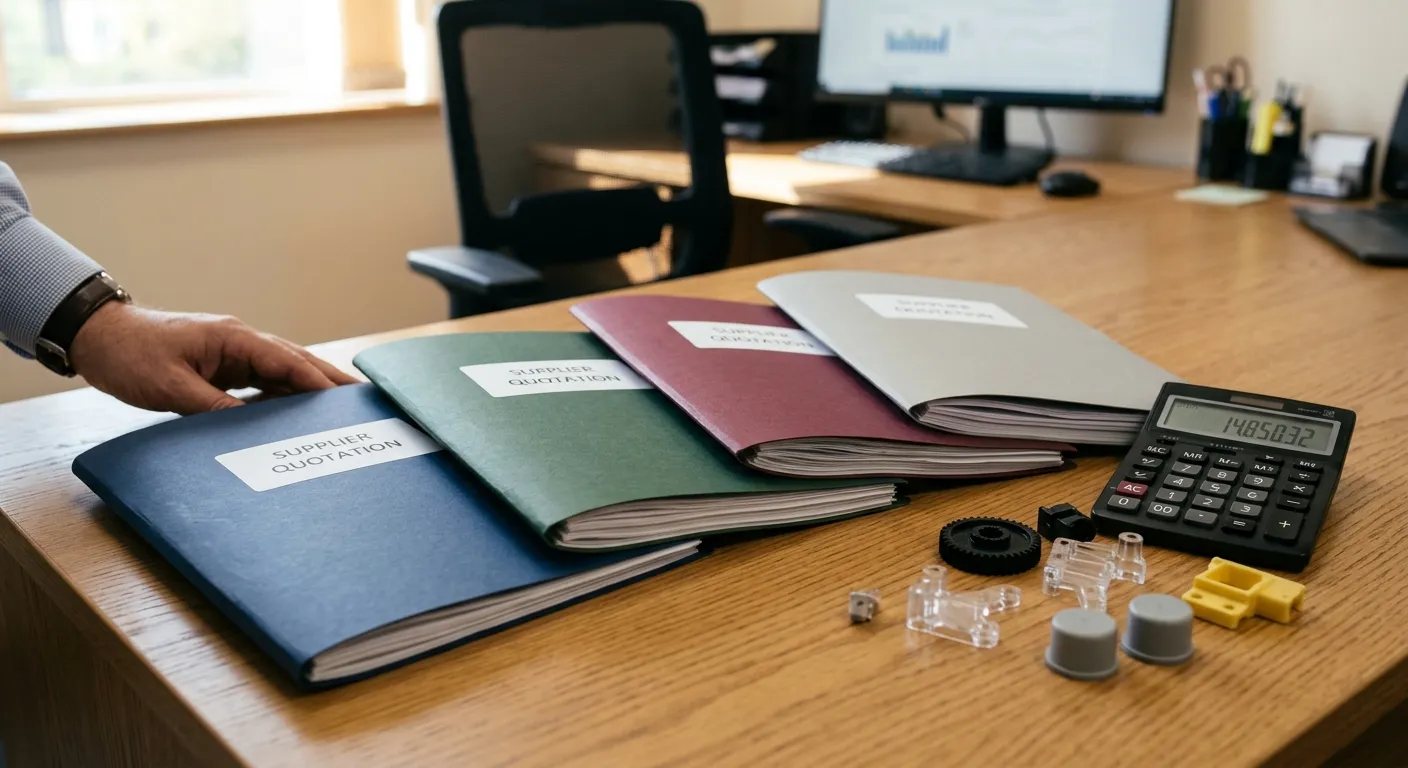
A quote from each country will rarely be like-for-like. Normalise every quote across these lines before you compare them.
| Cost line | What to ask for | Who usually wins |
|---|---|---|
| Tooling | Steel grade, cavities, guaranteed shot life, who owns the mold | Malaysia or Thailand (local toolrooms); Mexico often imports molds |
| Unit price | Material grade, cycle time assumption, scrap allowance | Vietnam for simple parts; Malaysia and Thailand for complex parts |
| Freight | Ex-works (EXW) price, packed volume per part, packaging spec | Mexico by a wide margin |
| Duty | HTS code, origin determination, USMCA eligibility | Mexico if USMCA-qualifying; otherwise roughly level in 2026 |
| Inventory | Safety stock needed to cover transit time | Mexico (days, not weeks, in transit) |
| Quality cost | Inspection plan, PPAP / FAI, scrap and return terms | The supplier with the most mature quality system, regardless of country |
| Engineering time | Language, time zone, response time to DFM questions | Malaysia (English) and Mexico (time zone) |
| Travel and audits | Flights, visas, how often you need to visit | Mexico; Malaysia if you already travel to Singapore |
One pattern is consistent across the programs we quote. For small, high-value parts that ship many units per container (typically parts molded on presses of 400 tonnes or less, usually under about 450 mm in their largest dimension), the difference in freight between Asia and Mexico is a small share of landed cost, and tooling and unit price decide the outcome. For large, low-value parts, freight and inventory can outweigh everything else, and Mexico becomes hard to beat. Our guide to shipping plastic parts from Malaysia and tooling cost guide cover the numbers in more detail, and our worked landed-cost example compares one part made in the US and in Malaysia line by line.
How to Choose: A Simple Decision Guide
- Choose Malaysia when you need new molds built, the design is still evolving, your IP is valuable, or you want engineers who discuss DFM with you in English.
- Choose Vietnam when the part is simple, the product is assembly-heavy, the molds already exist, and unit cost outweighs everything else.
- Choose Thailand when you are in the automotive supply chain, or your customer already sources there.
- Choose Mexico when parts are large or bulky, demand is volatile and needs fast replenishment, or USMCA duty treatment changes the business case.
When Malaysia Is Not the Right Answer
We turn down or redirect some enquiries, and it is worth being honest about why. Malaysia is rarely the best choice when:
- the part is large, light and cheap, so you are mostly paying to ship air across the Pacific;
- the lowest possible unit price is the only criterion and the part is simple enough for any competent molder;
- your customer requires USMCA regional content, or North American production for other reasons.
In those cases, the honest recommendation is Mexico or a lowest-cost Asian supplier, sometimes alongside a Malaysian source for the more complex parts in the same product.
Rules of Origin: Why “Made In” Has to Be Real
Moving production only reduces tariff exposure if the country of origin genuinely changes. For US customs purposes, origin is the country where the product last underwent a substantial transformation. Molding plastic resin into a finished part generally qualifies. Repacking, relabelling or lightly assembling Chinese-made parts does not, and US Customs and Border Protection actively investigates transshipment, with penalties that can far exceed the duty saved.
In practice, ask any new supplier where the resin, the mold and any bought-in components come from, keep that documentation on file, and request a binding ruling from US Customs if your product's origin is not clear-cut. For Mexico, check separately whether your part meets the USMCA rules of origin; Mexican manufacture alone does not guarantee duty-free treatment.
The Two-Country Strategy
Many of the companies we work with don't choose one country; they split the product. A common pattern is to build molds and run precise, high-value or IP-sensitive parts in Malaysia, while large, bulky or fast-moving parts are molded in Mexico, close to final assembly. Another is to run production in one country and keep a qualified second source in another, with duplicate or transferable molds, so a disruption in one location doesn't stop the line.
The cost of a second source is mainly a duplicate mold and a qualification run. For critical parts, that is usually cheaper than a single supply disruption.
Supplier Checklist: Questions to Ask in Any Country
The supplier matters more than the country. Whichever country you shortlist, ask each supplier:
- Which quality certifications do you hold, and can I see the certificates?
- What press tonnage range do you run, and how much capacity is free?
- Who will be my day-to-day engineering contact, and in what language?
- Who owns the mold, and can I transfer it if I move production?
- Which customers in my industry can you name or refer me to?
- How do you protect customer CAD files and drawings?
For a longer list of pitfalls, see common mistakes first-time importers make and our guide to protecting your IP when manufacturing overseas.
What About India and Indonesia?
Both appear on longer shortlists. India has a large domestic plastics industry and strong government incentives for electronics manufacturing, but export-oriented precision molding for Western customers is less established and logistics can be slower. Indonesia has a big domestic market and low labour costs, but its molding sector serves mainly domestic demand. Both are worth watching; for most export programs today, the four countries above remain the practical shortlist.
What to Watch in 2026 and 2027
- US tariff litigation. After the Supreme Court struck down the IEEPA tariffs in February 2026, the replacement Section 301 duties are being challenged in the Court of International Trade, and further Section 301 investigations are under way.
- The USMCA joint review. Its outcome will shape how attractive Mexico remains for companies relying on duty-free treatment.
- Transshipment enforcement. Expect continued scrutiny of origin claims, particularly for goods with significant Chinese content.
- Wage growth across Southeast Asia. Vietnam raised its regional minimum wages in January 2026, and the labour-cost gap between countries is narrowing.
Considering Malaysia?
Ichiplas is an ISO 9001:2015 certified injection molder in Johor Bahru, Malaysia, founded in 1994, a short drive from Singapore. We design and build molds in-house and run 50 to 360-tonne presses for customers including Dyson and Shimano, from about 3,000 to 15 million parts a year. Learn more about how we work with US companies diversifying from China.
Send us your CAD files or project brief via our contact page. We'll give you a tooling estimate, unit pricing guidance and DFM feedback, and tell you honestly if another country would serve the part better.
Frequently Asked Questions
Which country is best for injection molding outside China?
There is no single best country; it depends on the part and the program. Malaysia is usually strongest when you need mold-making and molding from the same English-speaking supplier with solid IP protection. Vietnam suits labour-intensive, cost-driven assembly. Thailand is strongest in automotive supply chains. Mexico wins when transit time, bulky parts or USMCA tariff treatment matter most.
Is Malaysia cheaper than Mexico for injection molding?
On unit price, Malaysian molding is often cheaper than Mexican molding, and Malaysian tooling is usually cheaper and quicker because many Malaysian molders build molds in-house or with nearby local partners. Mexico's advantage is freight, inventory and, for USMCA-qualifying goods, duty. For small, high-value parts (typically those molded on presses of 400 tonnes or less, usually under about 450 mm in their largest dimension) Malaysia often wins on landed cost; for large, bulky or fast-moving parts Mexico often does.
Is Vietnam good for plastic injection molding?
Vietnam has grown quickly and offers the lowest labour costs of the four countries, which makes it attractive for simple parts and assembly-heavy products. Its mold-making base is thinner, so complex tools are often built in China and shipped in, and US customs pays particular attention to transshipment. Vietnam works best for straightforward parts with an experienced, often foreign-owned supplier.
What US tariffs apply to plastic parts from Malaysia, Vietnam, Thailand and Mexico?
As of November 2026, after the Supreme Court struck down the IEEPA tariffs in February 2026, goods from Malaysia, Vietnam and Thailand face duties under the 2026 Section 301 forced-labor action in a band of roughly 10–12.5%, on top of normal MFN duty. USMCA-qualifying goods from Mexico are exempt. These tariffs are being challenged in court, so confirm the current rate for your HTS code before costing a program.
How long does shipping take from Malaysia to the US compared with Mexico?
Sea freight from Malaysia to the US West Coast typically takes 18 to 25 days port to port, and longer to the East Coast. From Mexico, parts usually reach US customers by truck in one to five days. Companies sourcing from Asia offset the longer transit with safety stock or a US distribution partner.
Does molding a part in Malaysia make it Malaysian origin for US customs?
Generally, yes. US customs assigns origin to the country where a product last underwent substantial transformation, and molding plastic resin into a finished part usually qualifies. Simply repacking, relabelling or lightly assembling parts made elsewhere does not. Ask for a binding ruling from US Customs if your product's origin is not clear-cut.
Can I move an existing mold from China to Malaysia, Vietnam, Thailand or Mexico?
Yes. Molds are routinely transferred between countries. The receiving molder should inspect the tool, check it against the part drawings and the new press specifications, and run trial shots before production. Budget for some refurbishment, especially for older or heavily used tools.
Which country has the best IP protection for manufacturing?
Of the four, Malaysia's common-law legal system and English-language contracts are the most familiar to US, UK and Singapore legal teams. Mexico benefits from the USMCA intellectual property chapter. Thailand and Vietnam have improved, but enforcement is generally considered less predictable. In every country, practical steps such as NDAs, limited file sharing and mold ownership clauses matter as much as the law.
Get Free Quote
Contact us today to learn more about our services and how we can help you with your next project.