

Insert Molding in Malaysia
Insert molding is a process in which plastic is injected around a pre-placed component — typically a brass or steel threaded insert, pin or connector — bonding metal and plastic into one part in a single operation. Ichiplas provides insert moulding from Johor Bahru, Malaysia to tolerances of ±0.02–0.05 mm under ISO 9001:2015.
Capability at a glance
- Clamping force
- 50–360 tonnes
- Molded tolerance
- ±0.02–0.05 mm (20–50 µm)
- Insert types
- Brass and steel threaded inserts, pins, bushings, connectors, magnets
- Quality certification
- ISO 9001:2015
What is Insert Molding?
Insert molding involves injecting plastic around a pre-placed insert, which can be made from a variety of materials, including plastic or metal. This process creates a strong, permanent bond between the materials, resulting in a single, integrated part.
The insert can range from a simple threaded insert or metal rod to more complex components like batteries, motors, or electronics. By combining these elements during the molding process, insert molding eliminates the need for secondary assembly steps, streamlining production and enhancing the overall product design.
Insert Molding
The Ichiplas Advantage
Competitive Pricing
The streamlined insert molding process at Ichiplas delivers numerous efficiency benefits:
- Reduced waste and scrap through precise part tolerances
- Improved production yields and lower reject rates
- Simplified supply chain management and logistics
- Faster time-to-market for new product introductions
Enhanced Durability
The strong bond created between the plastic and insert material through the molding process results in:
- Superior impact resistance
- Extended product lifespan
- Reduced risk of component separation
Improved Functional Integration
Inserts are embedded during the molding process to seamlessly integrate various functional components, such as:
- Electronic sensors and circuitry
- Mechanical fasteners and connectors
- Reinforcing structures and supports
- Aesthetic and branding elements
Used across various industries
Applications of Insert Molding
By combining the unique properties of plastics and metals, insert molding enables the production of parts with improved functionality, aesthetics, and performance.
Insert molding is widely used across various industries to create products that require the integration of different materials, such as:
- Household appliances
- Examples: handles, controls
- Automotive components
- Examples: pedals, gear shifters
- Medical devices
- Examples: surgical instruments, drug delivery systems
- Consumer electronics
- Examples: housings, connectors
- Industrial equipment
- Examples: power tool components, machinery parts
Our Insert Molding Process
At Ichiplas, we follow a rigorous process to ensure the highest quality insert molded parts:
- Design Consultation and Material Selection
- Collaborate on design specifics and select ideal materials for optimal performance.
- Prototyping and Testing
- Create and rigorously test prototypes to verify design and material compatibility.
- Mold Design and Fabrication
- Design and fabricate custom molds using advanced CAD/CAM and CNC technologies.
- Insert Preparation and Placement
- Precisely prepare and position inserts within the mold for secure integration.
- Injection Molding
- Inject plastic around the pre-placed insert, ensuring a strong, permanent bond.
- Quality Control and Testing
- Conduct comprehensive quality checks, including dimensional, strength, and functional testing.
- Final Assembly and Packaging
- Assemble additional components and package products for safe, secure shipping.
Related Guides
Frequently Asked Questions
- What types of inserts can be molded into plastic parts?
- Common inserts include threaded metal fasteners (brass, stainless steel), metal pins and bushings, electronic connectors, magnets, batteries, springs, and even PCB assemblies. The insert is placed in the mold before injection, and the plastic flows around it, creating a strong mechanical and sometimes chemical bond. At Ichiplas, we design the mold to hold each insert precisely in position during injection.
- What is the advantage of insert molding over press-fitting or ultrasonic insertion?
- Insert molding creates a stronger bond than post-molding insertion methods because the plastic solidifies directly around the insert, filling undercuts and knurling patterns completely. It also eliminates a secondary assembly step, reducing labour cost and improving consistency. For threaded inserts, insert molding typically provides higher pull-out and torque resistance than press-fit or heat-staked alternatives.
- What materials are compatible with insert molding?
- Most rigid thermoplastics work well with metal inserts — common combinations include ABS, PC, PC/ABS, Nylon, PBT, and POM with brass, steel, or aluminium inserts. For glass-filled materials (Nylon GF, PBT GF), the abrasive resin requires high-grade mold steel. Our engineering team advises on the best material and insert combination for each application.
- Can insert molding be combined with overmolding?
- Yes. Complex parts can incorporate both metal inserts and overmolded soft-touch surfaces in a multi-step molding process. For example, a power tool housing might have threaded brass inserts molded into a rigid PC/ABS substrate, which is then overmolded with a TPE grip surface. Ichiplas has extensive experience with these multi-process assemblies.
- How are inserts held in position during injection?
- Inserts are located on core pins, pockets or magnets machined into the mold so they cannot shift when molten plastic hits them at pressure. For higher volumes the loading step can be automated or semi-automated. Getting this right matters: an insert that moves even fractionally during the shot produces flash over the thread, an off-position boss, or a short shot around the insert.
- What tolerances can you hold on insert molded parts?
- Ichiplas holds ±0.02–0.05 mm (20–50 µm) on molded features. Insert position tolerance is governed separately by the tolerance of the incoming insert itself and the fit of its locating feature in the tool, so we review incoming component drawings alongside the plastic part drawing during DFM to confirm the stack-up is achievable.
Project Examples
Our showcase exemplifies the consistent excellence that defines Ichiplas. From the smallest parts to complex assemblies, we maintain the same high standards across all our products, ensuring you receive nothing short of the best, every single time.
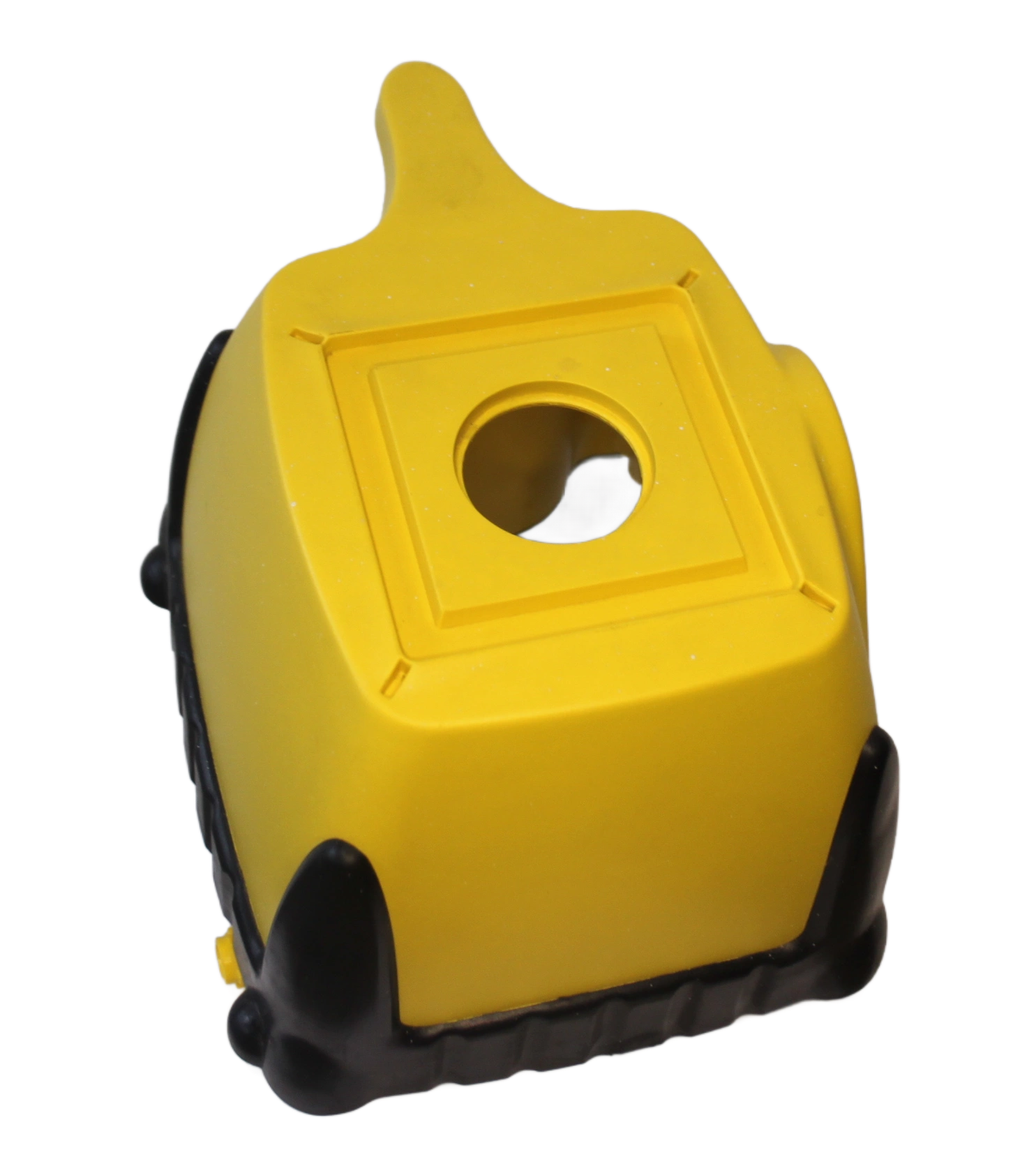
Overmolded Electronics Casing
A highly complex double overmolded casing.
Process: Double overmolding process and insert molding with magnet
Materials: PA66 with TPU
Dimensions: Outer diameter: 20cm, Height: 18cm
Applications: Electronics casing and assembly
Advantages: Fire-rated for integrated charging, magnetic quick-release capability
Key Features:
- Complex multi-material cosmetic design
- Integrated magnet for secure fitting
Get Free Quote
Contact us today to learn more about our services and how we can help you with your next project.