
Why Malaysia? A Practical Guide for Companies Evaluating Injection Molding in Southeast Asia
By Daniel Tan, Sourcing & Commercial Lead · Jan 2026 · Reviewed by the Ichiplas engineering team
A clear-eyed look at what Malaysia offers as an injection molding destination — and where it falls short.
If you're evaluating where to manufacture injection molded plastic parts, the decision is no longer as simple as “default to China.” Tariff uncertainty, supply chain disruptions, IP concerns, and communication friction have pushed thousands of companies to look at alternatives. Southeast Asia is the most common destination — and within the region, Malaysia keeps coming up.
This article is for procurement managers, engineering leads, and founders who are seriously evaluating Malaysia as an injection molding location. We'll cover what Malaysia genuinely does well, where it's less competitive, and how it compares to China and Vietnam on the factors that actually matter for manufacturing decisions.
The Starting Point: Why Look Beyond China?
China remains the world's largest injection molding market by a wide margin. Its supplier base is enormous, its tooling costs are among the lowest globally, and its ecosystem for high-volume plastics production is unmatched. For many projects, China is still the right answer.
But the landscape has shifted. Since 2018, a combination of factors has made single-source reliance on China riskier than it used to be:
- Tariff volatility: US tariffs on Chinese goods have fluctuated between 7.5% and 25% depending on product category and administration. The unpredictability itself is a cost.
- IP concerns: While China's IP enforcement has improved, many companies — particularly those with proprietary product designs — still prefer jurisdictions with stronger legal protections.
- Communication barriers: English proficiency varies widely among Chinese manufacturers. Miscommunication during tooling development or engineering changes can add weeks to a project timeline and thousands of dollars in rework.
- Supply chain concentration risk: COVID-era disruptions demonstrated the danger of having all manufacturing in a single country. Board-level pressure to diversify supply chains is now common.
None of these factors make China a bad choice. They make it a choice that now requires comparison — which is where Malaysia enters the conversation.
What Malaysia Offers That Alternatives Don't
Malaysia's manufacturing sector didn't emerge overnight. The country has been producing plastic parts, electronic components, and precision assemblies for multinational companies for over four decades. What makes it relevant today is a specific combination of factors that are hard to find together in any other Southeast Asian country.
English-Language Communication
This is Malaysia's single most underrated advantage. English is the de facto language of business in Malaysia. Engineers, project managers, and factory-floor supervisors communicate fluently in English. This isn't tourist English or translator-mediated communication — it's native working proficiency.
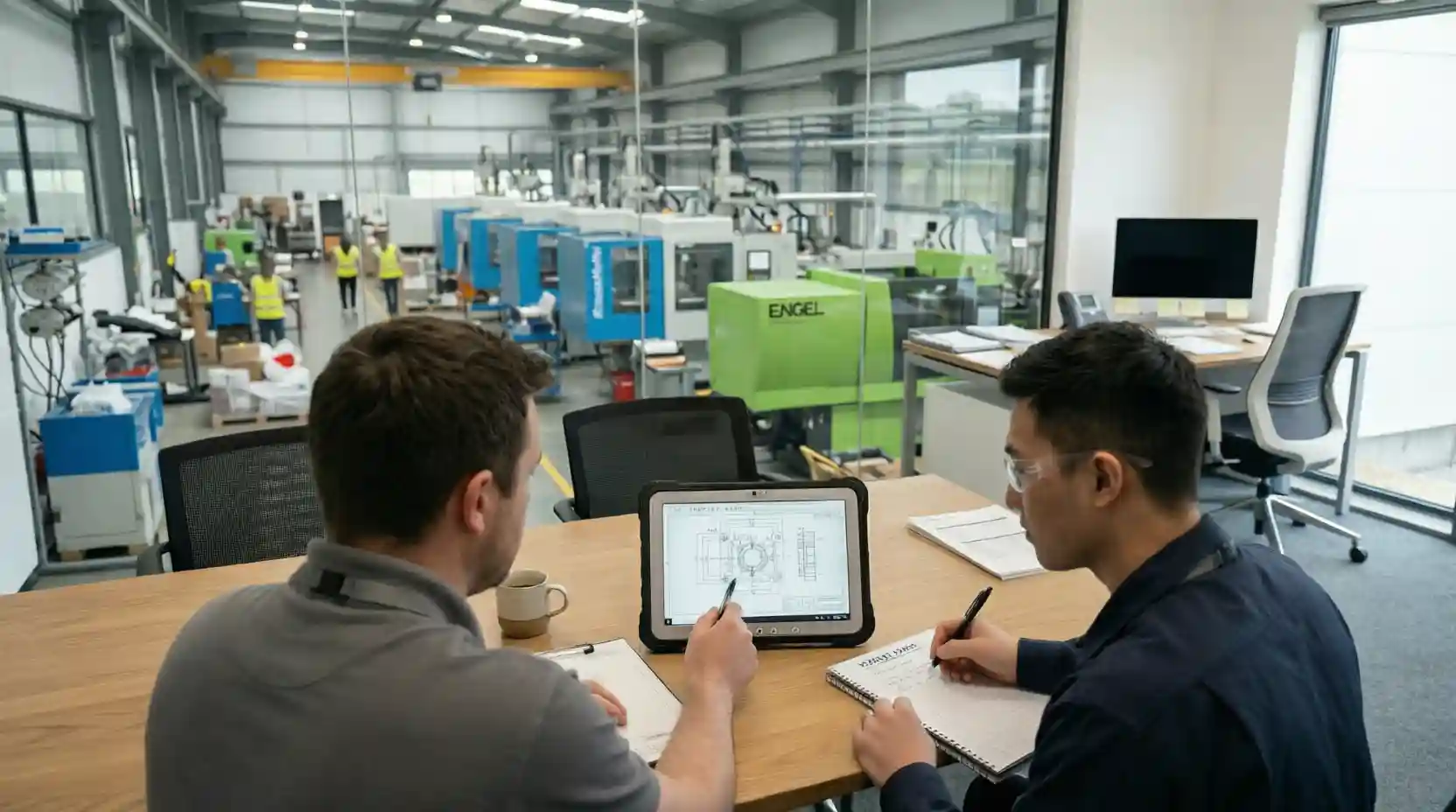
Why does this matter for injection molding specifically? Because the critical moments in a molding program are communication-heavy: DFM reviews, engineering change orders, T1 sample feedback, and quality issue resolution. When these conversations happen in fluent, unambiguous English, problems get solved faster and with fewer costly misunderstandings.
Intellectual Property Protection
Malaysia operates under a common-law legal system inherited from the British colonial period. NDAs and IP agreements are drafted in English, enforceable in Malaysian courts, and follow legal precedents familiar to Western legal teams. Malaysia is a signatory to major international IP treaties including the Paris Convention and the Madrid Protocol.
For companies whose product designs represent core competitive advantage — and for whom the cost of IP leakage would be measured in millions, not thousands — this legal infrastructure matters. We've written a more detailed analysis in our guide to IP protection in overseas manufacturing.
Mature Manufacturing Ecosystem
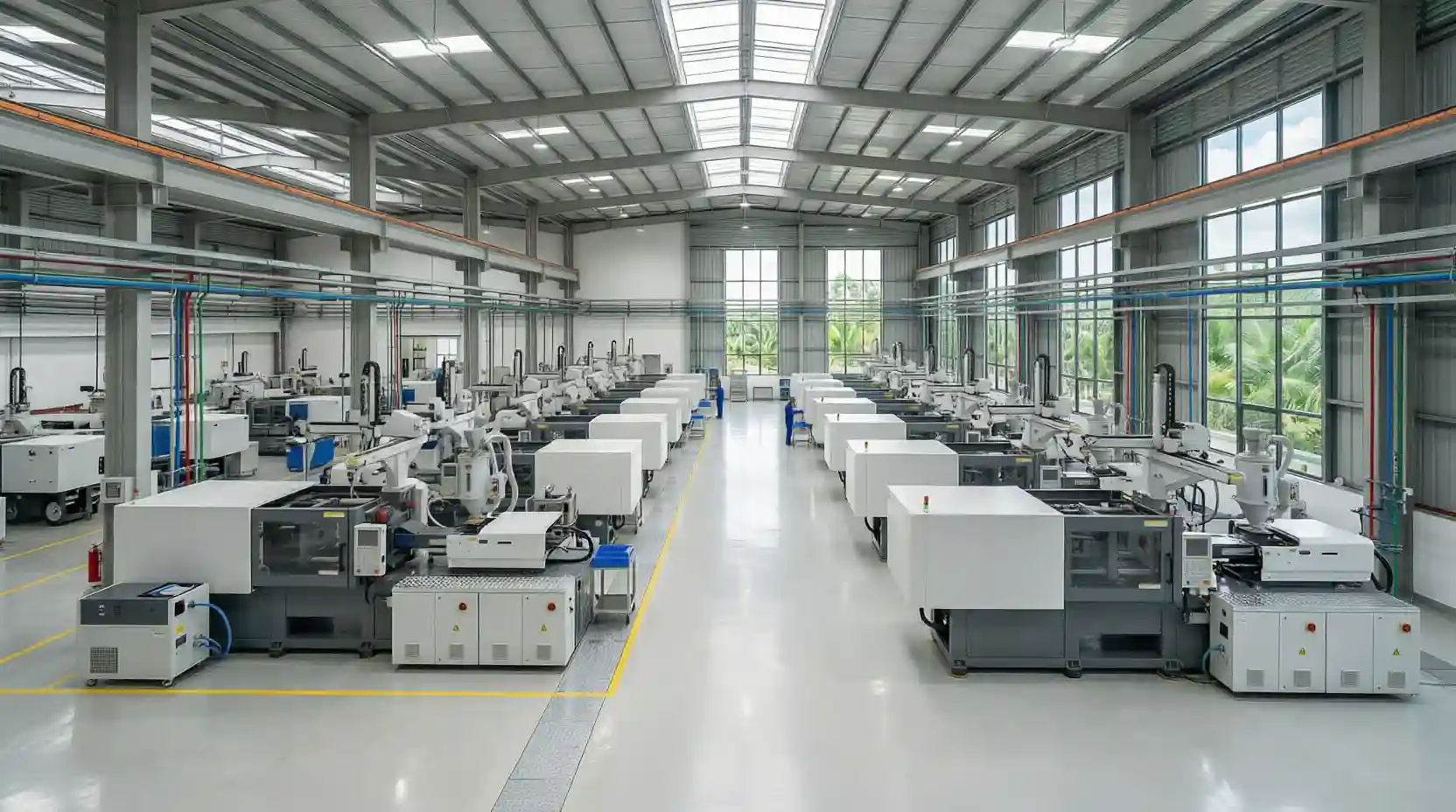
Malaysia isn't building its manufacturing base — it already has one. The country has ISO-certified injection molders, tooling shops, secondary assembly operations, and quality labs that have been serving multinationals for decades. You won't be a test case. Companies like Intel, Dyson, Bosch, and Panasonic have run significant manufacturing operations in Malaysia for years.
The supply chain for resin, mold steel, and auxiliary equipment is well-established. Material lead times are predictable. Quality management systems — ISO 9001, ISO 13485 for medical, IATF 16949 for automotive — are standard, not aspirational.
Strategic Location and Logistics
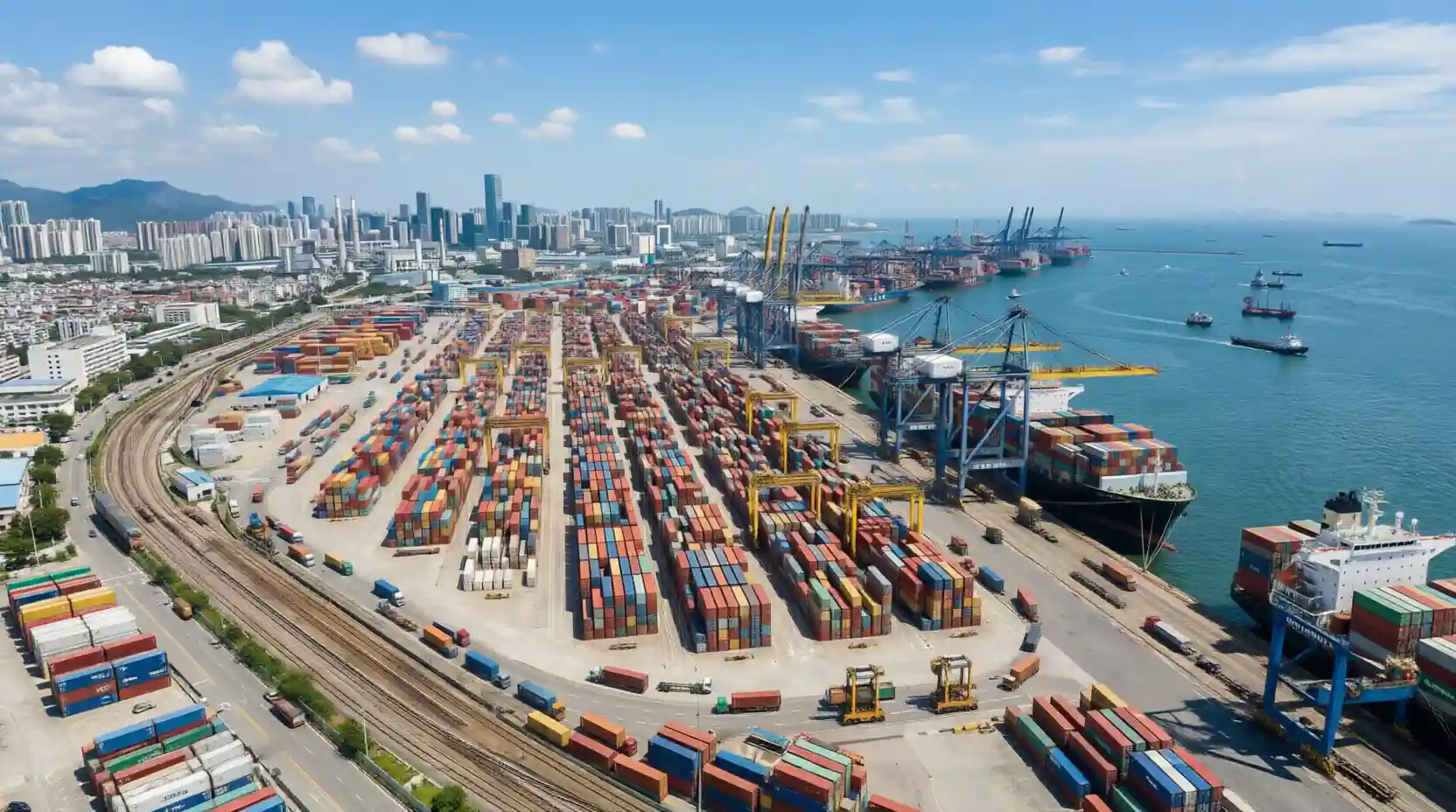
Malaysia sits at the centre of Southeast Asia's shipping routes. Port Klang is one of the world's busiest container ports, and Johor's proximity to Singapore provides access to one of the most efficient logistics hubs on the planet. Sea freight from Malaysia to the US West Coast takes 18–25 days — only marginally longer than from southern China.
For more detail on shipping logistics and transit times, see our guide on shipping from Malaysia to the US.
Supply Chain Diversification
For companies with existing Chinese suppliers, Malaysia isn't necessarily a replacement — it's a hedge. Running a parallel supply source in Malaysia means that if tariffs spike, a port closes, or a geopolitical event disrupts your primary source, you have an operational alternative. This “China Plus One” strategy has moved from corporate buzzword to boardroom mandate at many companies.
A Realistic Comparison
The following table compares Malaysia, China, and Vietnam across the factors that matter most for injection molding sourcing decisions. These are generalisations — individual suppliers in any country can outperform or underperform their national average — but they reflect the typical experience of companies evaluating these options.
| Factor | Malaysia | China | Vietnam |
|---|---|---|---|
| Unit cost | Moderate (10–30% above China) | Lowest | Low to moderate |
| Tooling cost | Moderate (10–30% above China) | Lowest | Moderate; limited advanced tooling |
| English proficiency | High (business-fluent) | Variable (often requires translator) | Low to moderate |
| IP protection | Strong (common-law system) | Improving but variable | Developing |
| Manufacturing maturity | 40+ years serving multinationals | Deepest ecosystem globally | Growing rapidly but less depth |
| Logistics to US | 18–25 days sea freight | 14–22 days sea freight | 20–28 days sea freight |
| Tariff exposure (US) | Generally lower; no Section 301 tariffs | Subject to Section 301 tariffs (7.5–25%) | Generally lower; growing scrutiny |
Where Malaysia Is Less Compelling
Honesty matters in these decisions. Malaysia is not the right choice for every project. Here's where it falls short:
- Lowest possible unit cost: If your product competes purely on price and your margins depend on squeezing every fraction of a cent from the unit cost, China's scale and labour cost advantages will be hard to beat. Malaysia is competitive, but it is not the cheapest option in Asia.
- Very high-volume, commodity-grade production: For programs requiring hundreds of millions of simple parts per year — think disposable cutlery or basic packaging — China's sheer capacity and infrastructure for ultra-high-volume commodity molding are difficult to match anywhere.
- Deep, vertically integrated supply chains: If your product requires dozens of different components sourced from a tight geographic cluster — PCBs, flex cables, displays, batteries, and plastic housings all within a 50 km radius — China's Shenzhen/Dongguan corridor is still uniquely positioned. Malaysia's supply chain is mature but not as vertically concentrated.
The Tariff Factor
Tariffs are one of the most frequently cited reasons for diversifying away from China, and the numbers are significant. US Section 301 tariffs on many Chinese-manufactured plastic goods range from 7.5% to 25%. Malaysian-manufactured goods are generally not subject to these tariffs, which can represent a meaningful cost advantage that partially or fully offsets Malaysia's higher unit pricing.
However, tariff policy is inherently unpredictable. We would not recommend making a major supply chain decision based solely on current tariff rates. The stronger argument for Malaysia is the combination of tariff advantage and the other structural benefits described above. If tariffs change, the communication, IP, and diversification advantages remain.
For a more detailed analysis of shipping costs and landed cost calculations, see our guide on shipping from Malaysia to the US.
Who Should Consider Malaysia?
Based on our experience working with companies that have successfully transitioned production to Malaysia, the strongest fit tends to be:
- Companies with proprietary product designs where IP protection is a board-level concern.
- Engineering-led organisations where direct, English-language communication with the factory is important for design iteration and quality control.
- Businesses implementing a “China Plus One” strategy and needing a qualified, proven alternative source.
- Mid-volume programs (tens of thousands to low millions of parts per year) where total cost of ownership — not just unit price — drives the sourcing decision.
- Companies selling into the US market that want to reduce tariff exposure while maintaining Asian cost structures.
Start the Conversation
If you're evaluating Malaysia for injection molding — whether as a new supplier, a China alternative, or a dual-source strategy — we're happy to discuss your specific requirements. No commitment needed.
Send us your 3D CAD files or project brief via our contact page. We respond to all enquiries by the next business day. We'll provide an initial assessment including tooling cost estimate, unit pricing guidance, lead time, and DFM feedback — at no cost and with no obligation.
Frequently Asked Questions
Why should I consider Malaysia for injection molding instead of China?
Malaysia offers a combination of advantages that China cannot match for many companies: fluent English communication across the workforce, strong and enforceable IP protection under a common-law legal system, competitive pricing that is typically only 10–30% higher than Chinese equivalents, and strategic value as a supply chain diversification option outside of China. For companies where communication clarity, IP security, and risk mitigation matter alongside cost, Malaysia is a compelling alternative.
Is injection molding in Malaysia more expensive than in China?
Malaysian injection molding is typically 10–30% more expensive than equivalent Chinese production on a pure unit-cost basis. However, when you factor in the total cost of ownership — including fewer miscommunication-driven rework cycles, stronger IP protection, reduced supply chain risk, and faster design iteration loops — the gap narrows significantly. For many mid-volume and IP-sensitive projects, Malaysia can be cost-competitive or even cost-advantageous over the life of a program.
What industries does Malaysia serve for injection molding?
Malaysia has a mature injection molding ecosystem serving consumer electronics, medical devices, automotive components, industrial equipment, and consumer products. The country has decades of experience supplying multinational companies in these sectors, with established quality management systems including ISO 13485 for medical and IATF 16949 for automotive.
How does Malaysia protect my intellectual property?
Malaysia operates under a common-law legal system inherited from the British colonial period. This means NDAs and IP agreements are drafted in English, enforceable in Malaysian courts, and follow legal precedents familiar to Western legal teams. Malaysia is also a signatory to major international IP treaties including the Paris Convention and the Madrid Protocol. For a deeper analysis, see our guide to IP protection in overseas manufacturing.
How long does it take to ship injection molded parts from Malaysia to the US?
Sea freight from Port Klang or Johor to major US ports (Los Angeles, Long Beach, New York) typically takes 18–25 days. Malaysia's ports are modern and well-connected, with direct shipping routes to North America, Europe, and across Asia-Pacific. Air freight is also available for urgent shipments, with typical transit times of 3–5 days. For a full breakdown, see our guide on shipping from Malaysia to the US.
What is the minimum order quantity for injection molding in Malaysia?
There is no universal minimum order quantity — it depends on the project. Malaysian molders, including Ichiplas, are experienced in handling both low-volume production runs (hundreds to low thousands of parts) and high-volume programs (hundreds of thousands or more). The economics of injection molding are driven more by tooling amortisation and cycle time than by arbitrary MOQ rules. For more detail on tooling costs, see our tooling cost guide.
How do I get started with injection molding in Malaysia?
The simplest way to start is to send your 3D CAD files and project requirements to a Malaysian injection molder for review. At Ichiplas, we respond to all enquiries by the next business day and provide detailed quotations including tooling cost, unit pricing, lead time, and DFM feedback. No commitment is required to start a conversation. Get in touch here.
Get Free Quote
Contact us today to learn more about our services and how we can help you with your next project.