
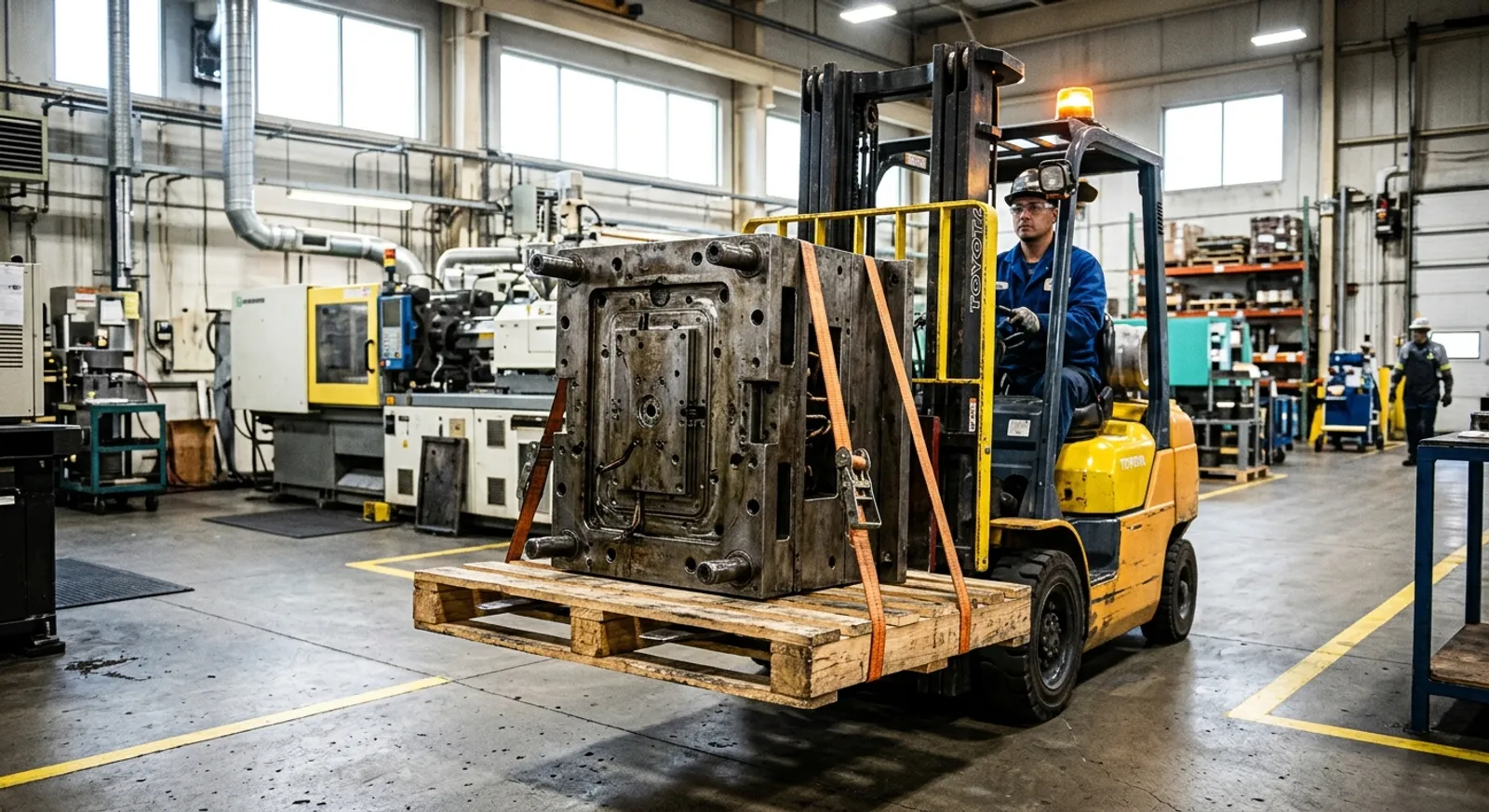
Transferring an Injection Mold from China to Malaysia: A Step-by-Step Guide
By Ichiplas Sourcing & Commercial Team · Nov 2026 · Reviewed by the Ichiplas engineering team
Moving an existing mold is often the fastest way to shift production out of China. Done carelessly, it is also the easiest way to stop your supply line for months.
The short answer
You can move a mold you own from China to Malaysia in about 6–10 weeks from release to approved parts, if the mold is in good condition. The keys are to confirm ownership in writing, collect the drawings, process sheets, spares and last-shot samples, build enough safety stock to cover the gap, and have the new molder check press fit from the mold details before the mold ships.
Tariffs, rising costs and the push for a China Plus One supply chain mean many brands now want to move molds that have run in China for years. Transferring an existing mold avoids the cost and lead time of new tooling, but a mold is not a plug-and-play component. It was built for another supplier's presses, tuned to their process, and maintained (or not) by their toolroom. This guide walks through the transfer step by step, from the conversation with your current supplier to the first approved parts in Malaysia.
Mold Transfer at a Glance
A typical sequence and duration for a single mold in reasonable condition. Molds needing refurbishment, hot runner rework or a full customer requalification take longer.
| Step | What happens | Typical duration |
|---|---|---|
| 1. Confirm ownership | Locate proof that you own the mold and agree the release terms with the current supplier | 1–2 weeks |
| 2. Collect documents and samples | Mold drawings, part CAD, process sheets, maintenance records, spares and last-shot samples | 1–2 weeks (in parallel) |
| 3. Build safety stock | Run enough parts in China to cover transit, trials and approval | 2–6 weeks (in parallel) |
| 4. Crate and export | Clean, rust-proof, close and crate the mold; export customs clearance | About 1 week |
| 5. Ship to Malaysia | Sea freight to Port Klang, Pasir Gudang or Tanjung Pelepas, then import clearance | About 2–3 weeks door to door |
| 6. Incoming inspection | Strip-down, condition check and press fit check at the new molder | About 1 week |
| 7. Refurbish (if needed) | Repair worn or damaged components, adapt the mold to the new presses | 0–6 weeks |
| 8. Trial and requalify | Trial shots, dimensional comparison with last-shot samples, customer approval | 1–3 weeks |
Before the Mold Moves
1. Confirm you own the mold
In most custom molding arrangements, the customer pays for the tooling and owns the mold. But “we paid for it” is not always the same as being able to prove it. Find the tooling invoice, proof of payment and any tooling agreement. Check whether part of the tooling cost was amortized into the part price, because a supplier may expect the balance to be settled before release. Clear any open invoices, and agree in writing exactly what is being released: the mold, its spares, and any related fixtures or gauges.
2. Collect documents, spares and last-shot samples
The mold is only half of what you need. Without drawings, process data and reference samples, the new molder has to reverse-engineer how the tool was run. The most important item is a set of last-shot samples: parts from the final production run, from every cavity, with the runner still attached. They show exactly what the mold was producing when it left, which becomes the benchmark for the first trials in Malaysia.
What to Collect Before the Mold Leaves China
| Item | Why you need it |
|---|---|
| Proof of mold ownership | Tooling invoices, payment records and any tooling agreement, so the supplier can't dispute the release |
| Mold assembly drawings and BOM | Lets the new molder check press fit, order spares and repair the mold without guesswork |
| Part 3D CAD and 2D drawings (latest revision) | The reference for inspection and any future changes; confirm the revision matches the mold |
| Process parameter sheet | Temperatures, pressures, times and the press used: the fastest starting point for the first trial |
| Last-shot samples | Parts from the final production run, with the runner attached, from every cavity. The benchmark for requalification |
| Maintenance and modification history | Shows shot count, past repairs and engineering changes, and helps estimate remaining mold life |
| Spare parts | Spare inserts, ejector pins, cores and wear parts already paid for or made for the mold |
| Material specification | Exact resin grade, color masterbatch and supplier, so the new molder can source the same material |
| Inspection records and gauges | Previous dimensional reports and any customer-owned checking fixtures |
3. Build safety stock
From the day the mold stops running in China until the first approved parts come off a press in Malaysia, you have no production. Build enough inventory to cover export, transit, inspection, any refurbishment, trials and approval, plus a margin for surprises. For one mold in good condition, 8–12 weeks of demand is a common target. If your own customer must requalify the part, add their approval time too.
Time the safety-stock run with care. It is also the last chance to see the mold running in its old setting, so ask for the process sheet to be recorded during that run, and collect the last-shot samples from it.
Crating and Shipping the Mold
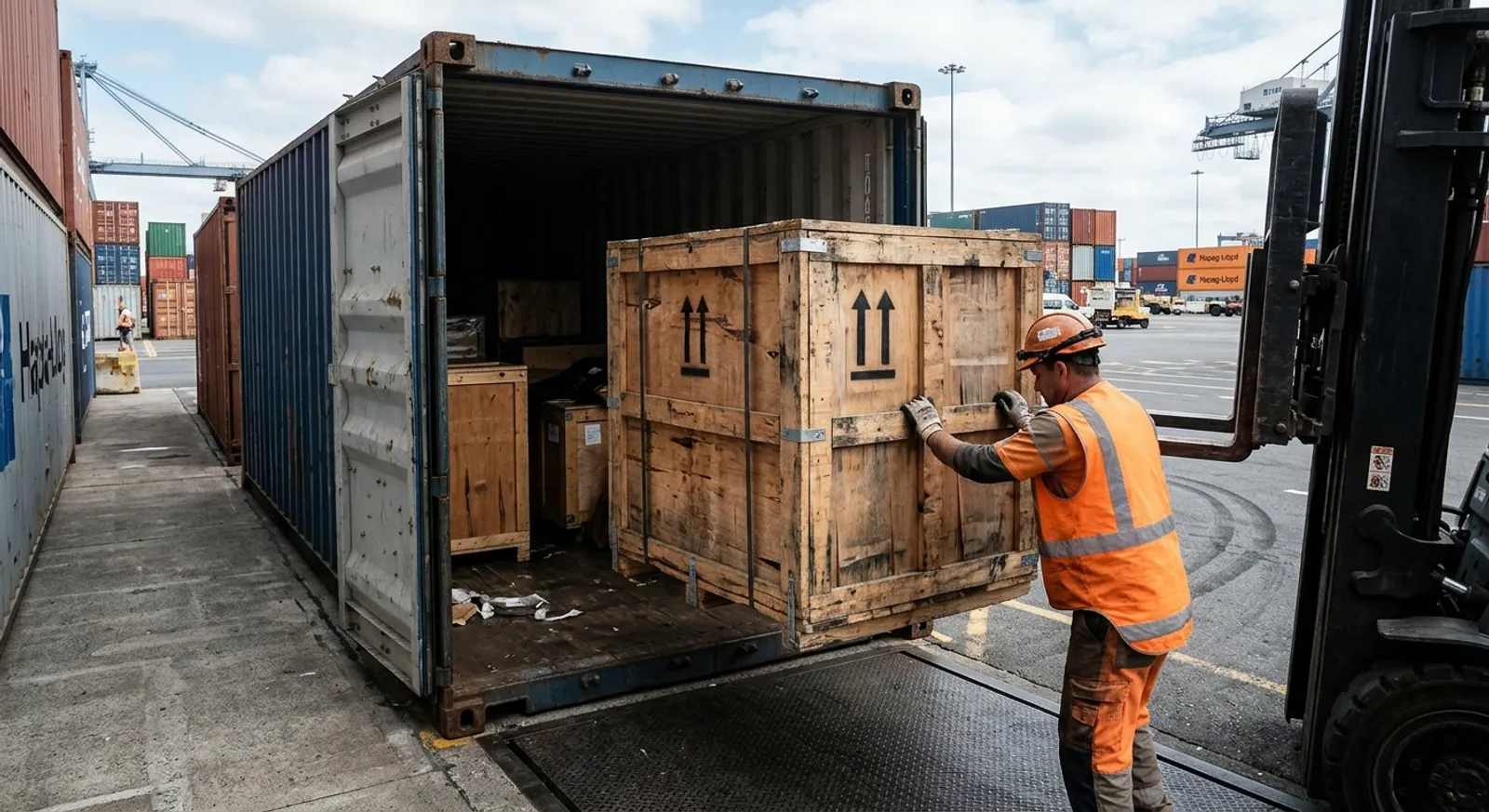
- Clean and protect it. The mold should be cleaned, the cooling channels blown dry, and all steel surfaces coated with rust preventive. Sea freight is humid, and a rusted cavity surface can mean polishing or re-texturing before the mold can run.
- Lock it closed. Fit the mold safety straps (latch plates) so the halves cannot separate in transit, and make sure lifting eye bolts are included.
- Crate it properly. Use a strong wooden crate with the mold bolted or braced to a skid. Export wood packaging must be heat-treated and stamped to ISPM 15. Pack the spares, drawings and samples in the same crate or a clearly labeled companion box.
- Photograph everything. Ask for photos of both mold halves, the parting line and the crating before it ships. If the mold arrives damaged, you will need them for an insurance claim.
- Plan for customs at both ends. The mold needs an export declaration in China and import clearance in Malaysia. Use a freight forwarder experienced with industrial equipment, and confirm the mold's HS code and any duty or tax treatment in Malaysia before it ships.
Sea freight from the main southern Chinese ports to Port Klang, Pasir Gudang or Tanjung Pelepas typically takes about a week at sea. Allowing for export clearance, port handling and import clearance, two to three weeks door to door is a realistic plan. Air freight is possible for small molds, but rarely worth the cost when safety stock is already in place.
When the Mold Arrives in Malaysia
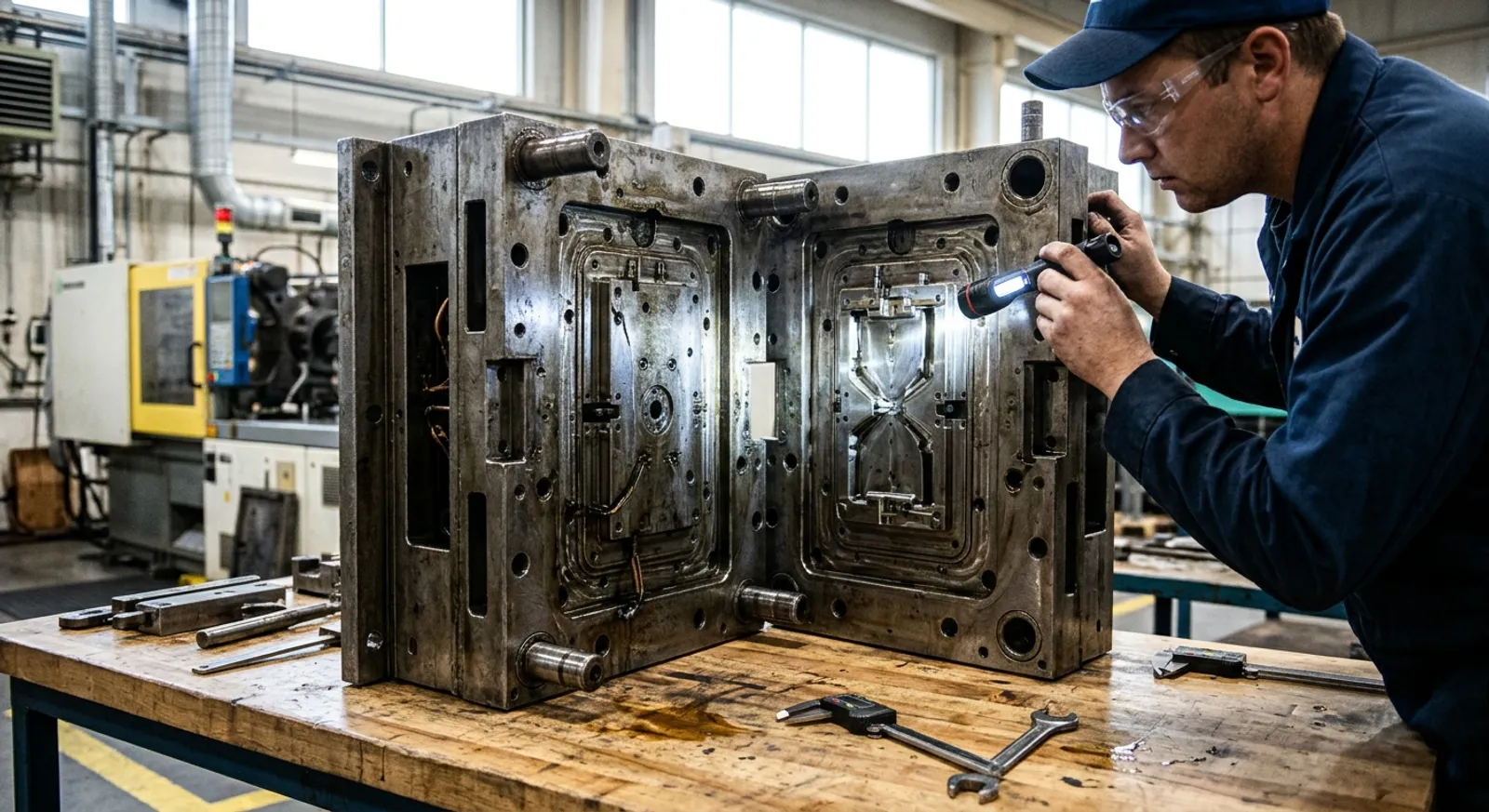
6. Incoming inspection
The receiving molder should open and strip down the mold, check the cavities and cores for wear, damage and rust, test the cooling circuits for leaks and blockages, check ejector pins, slides and lifters for wear, and test any hot runner zones. The result should be a written condition report with photos, listing anything that must be fixed before the first trial and anything that can wait.
7. Check press fit and refurbish if needed
The mold also has to suit the new molder's presses. Ideally this check happens from the mold details before the mold ships, so any adapter plates, locating rings or connectors are ready when it arrives.
Press Fit Checklist
A mold built for one supplier's presses won't automatically fit another's. These are the checks the receiving molder makes before the mold is accepted, ideally from the mold details before it ships.
| Check | Why it matters |
|---|---|
| Clamp tonnage | The new press must hold the mold closed at the injection pressure the part needs |
| Tie-bar spacing and platen size | The mold must physically fit between the tie bars and be supported by the platens |
| Mold height and opening stroke | The mold must fit the press's minimum and maximum mold height, and open far enough to eject the part |
| Shot size | The press must inject enough plastic per shot, without the barrel being oversized for the part |
| Locating ring and sprue bushing | The locating ring diameter and sprue radius must match the press platen and nozzle |
| Ejector pattern | Knock-out holes in the mold must line up with the press ejector rods |
| Clamping method | Clamp slots or bolt patterns must suit the new press, or an adapter plate is needed |
| Cooling connections | Thread types (for example BSP vs NPT) and circuit layout must match the new water manifolds |
| Hot runner controller | Zone count, connector pin-out, thermocouple type and voltage must match the new controller |
| Hydraulic or pneumatic cores | Core-pull cylinders and valve gates need compatible connections and press sequencing |
8. Trial and requalify the parts
The first trial uses the old process sheet as a starting point, not as a recipe: a different press, a different barrel and different cooling water mean the process almost always needs re-optimizing. Trial parts are then measured against the part drawing and compared with the last-shot samples from China. Depending on your requirements, requalification may be a first-article inspection report, a full PPAP package, functional testing, or approval by your own customer. Once the parts are approved, a short pilot run confirms the process is stable before full production.
Common Mold Transfer Problems and How to Avoid Them
- The supplier delays or refuses the release. Have your ownership documents ready, settle open invoices, and build your safety stock before raising the move.
- The mold arrives without spares or drawings. Agree a written list of everything that ships with the mold, and check it against the crate before the mold leaves.
- The mold is more worn than expected. Ask for the shot count and maintenance history in advance, and budget time and money for some refurbishment, especially on older molds.
- The parts don't match the drawing. Molds are often modified over the years without the drawing being updated. Last-shot samples show what the mold really produces, so the new molder can tell a transfer problem from a long-standing one.
- The material isn't the same. Confirm the exact resin grade and colorant. A different grade of the “same” material can shrink differently and shift dimensions.
- The safety stock runs out. Plan for the slowest realistic case, not the fastest, and track the transfer weekly against the stock you have left.
Transfer the Mold or Build a New One?
Transferring is usually the cheaper option when the mold is in good condition, has plenty of life left, and the part design is stable. Building a new mold in Malaysia makes more sense when the existing mold is worn, when you want to make design changes anyway, or when ownership of the old mold is unclear. A new mold has one more advantage: the Chinese mold keeps running until the Malaysian one is approved, so there is no production gap, and you can keep both as a dual source afterwards. Malaysian tooling usually costs a little more than Chinese tooling of the same quality; our tooling cost guide gives typical ranges.
Transferring Hot Runner Molds
Hot runner molds need extra preparation. Get the hot runner maker and model, the zone wiring diagram, thermocouple type and heater ratings, and ask whether the current supplier's temperature controller will be included. If not, the new molder must match a controller and wiring to the mold. Hot runner nozzles and manifolds should be checked for leaks and degraded material during the incoming inspection, because they are the most common source of trial problems after a transfer.
Country of Origin and US Customs
For molded plastic parts, the country of origin is generally where the part is molded, not where the mold was built, so parts molded in Malaysia from a Chinese-built mold are normally of Malaysian origin and outside the China-specific Section 301 tariffs. Separately, a mold you own and supply to an overseas molder is treated by US Customs as an assist, whose value is added to the customs value of the imported parts. Our landed cost guide explains how assists work. Confirm both points for your product with your customs broker.
Moving Several Molds at Once
If you are moving a family of molds, don't move them all at once. Start with one or two simple, stable molds to prove the process and the relationship, then move the rest in waves. Move molds for parts that are assembled together in the same wave, so you never have half a product in each country. Shipping several molds in one full container is usually cheaper per mold than separate shipments, but only if the safety stock for every mold in that container is in place.
Protecting Your Design During the Move
Sign an NDA with the new molder before sending drawings or CAD, and confirm mold ownership and the right to remove the mold in your new tooling agreement, so the next transfer, if there ever is one, is simpler. Our guide to IP protection in overseas manufacturing covers the practical steps.
Transferring Molds to Ichiplas
Ichiplas accepts injection molds transferred from other suppliers, including tools currently running in China. Our presses range from 50 to 360 tonnes, and our in-house toolroom and nearby local partners handle inspection, refurbishment and adaptation. Send us your mold details before the mold ships, and we'll check press fit and flag likely issues in advance. If the mold turns out to be at the end of its life, we can quote a replacement, and every new mold goes through a DFM analysis before any steel is cut.
Send us your mold details (size, weight, the press tonnage it ran on, and any hot runner or core pulls), photos of the mold and your annual volume via our contact page, and we'll advise on the transfer and quote the work.
Frequently Asked Questions
Can I move my injection mold from China to Malaysia?
Yes. Molds are routinely transferred from Chinese suppliers to Malaysian molders. If you own the mold, you can arrange for it to be crated, exported and shipped to the new molder, who inspects it, checks it against their presses, runs trial shots and requalifies the parts with you before production resumes.
How long does a mold transfer from China to Malaysia take?
For a mold in reasonable condition, about 6–10 weeks from agreeing the release to approved parts is typical: a week or two to confirm ownership and collect documents, about a week to crate and export, two to three weeks door to door by sea, and two to four weeks for inspection, trials and approval. Molds that need refurbishment or full customer requalification take longer.
What if my Chinese supplier won't release the mold?
Start with the paperwork. Tooling invoices, payment records and any tooling agreement that names you as the owner are your strongest position. Release disputes usually involve unpaid invoices, unclear ownership or an unamortized tooling cost built into the part price. Settle open invoices, confirm in writing what is being released, and avoid announcing the move until you have the documents, samples and safety stock you need. If ownership is unclear, building a new mold in Malaysia may be faster than a dispute.
How much safety stock should I build before transferring a mold?
Enough to cover the full time the mold is out of production, plus a margin: export, transit, inspection, any refurbishment, trials and customer approval. For a single mold in good condition that is commonly 8–12 weeks of demand, and more for molds that are old, complex or need requalification by your own customer.
Will my mold fit the new molder's presses?
Not automatically. The new molder must check clamp tonnage, tie-bar spacing, mold height, opening stroke, shot size, locating ring, sprue radius, ejector pattern, clamping method, cooling connections and hot runner wiring. Most mismatches can be solved with adapter plates, new locating rings or connector changes, but a mold that is too large for any available press cannot be run. Send the new molder the mold details before shipping so these checks happen first.
Do parts molded in Malaysia from a Chinese-made mold count as Chinese origin?
Generally no. For molded plastic parts, the country of origin is normally where the part is molded from resin, not where the mold was built, so parts molded in Malaysia are usually of Malaysian origin even if the tool came from China. Origin rules can depend on the product and its later processing, so confirm the classification with your customs broker.
Is it better to transfer an old mold or build a new one in Malaysia?
Transfer when the mold is in good condition, has plenty of life left and the part design is stable. Build new when the mold is worn, needs significant design changes, or when you want to keep the Chinese mold running as a second source. A new mold also avoids downtime, because the existing mold keeps producing until the new one is approved.
What does it cost to transfer a mold from China to Malaysia?
The main costs are crating and export handling at the current supplier, sea freight and customs clearance, inspection and any refurbishment at the new molder, trial shots and material, and the cost of carrying safety stock. Freight and handling are usually modest for a single mold; refurbishment varies most, because it depends entirely on the mold's condition. Ask the receiving molder to quote the inspection and trials up front, and to quote refurbishment once the mold has been assessed.
Get Free Quote
Contact us today to learn more about our services and how we can help you with your next project.