
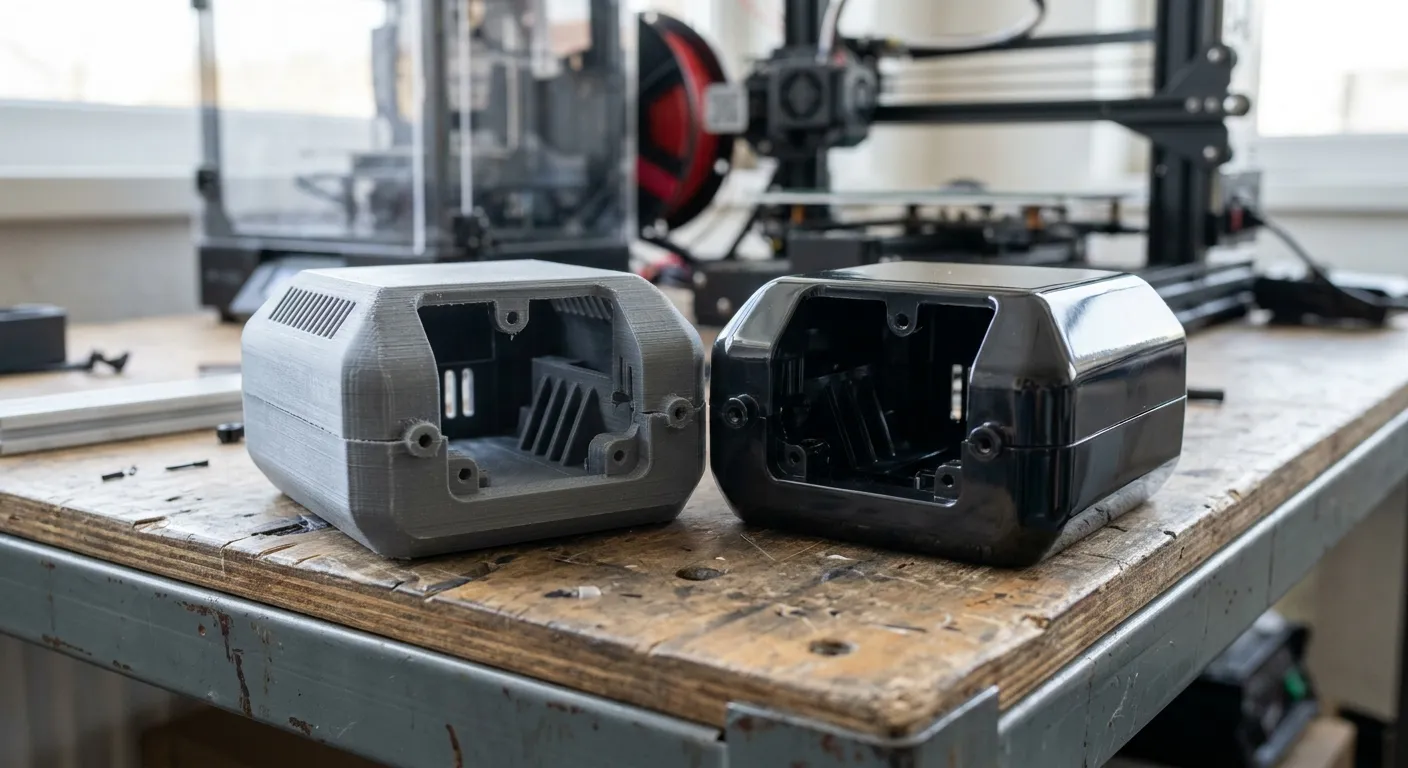
Injection Molding vs 3D Printing: Where Is the Break-Even Quantity?
By Ichiplas Design Engineering Team · Nov 2026 · Reviewed by the Ichiplas engineering team
3D printing and injection molding aren't really competitors. They are two stages of the same journey, and the question is when to switch.
The short answer
Use 3D printing for the first one to a few hundred parts, while the design is still changing. Switch to injection molding once the design is stable and you need more than a few hundred to a few thousand parts. For a typical small part, the break-even is often around 1,000 parts; beyond it, molding gets cheaper with every part, while printing barely does.
The two processes have opposite cost structures. 3D printing has no upfront cost but a high, nearly flat cost per part. Injection molding needs a mold up front, then makes each part for cents. That makes the decision mostly a question of quantity — but finish, tolerance, material and timing all shift the answer, so it's worth understanding each.
Injection Molding vs 3D Printing at a Glance
| Factor | 3D printing | Injection molding |
|---|---|---|
| Upfront cost | None | Mold required: prototype tools from about USD 4,300; production molds more |
| Cost per part | High, and falls only slightly with quantity | Very low once the mold exists |
| Time to first part | Hours to a few days | Typically 4–8 weeks including the mold |
| Materials | A few dozen printable grades (PA12, PA11, TPU, photopolymer resins, some PC and ABS) | Thousands of grades, including the exact production resin, flame-retardant and glass-filled grades |
| Surface finish | Visible layer lines or a grainy texture unless post-processed | Any finish the mold steel can carry, from mirror polish to texture |
| Tolerance | Typically ±0.1–0.3 mm depending on process | Down to about ±0.05 mm on suitable features |
| Strength | Often weaker between layers (anisotropic) | Full material properties, consistent in every part |
| Design rules | Few: no draft, undercuts are free | Needs draft, uniform walls and planned undercuts |
| Design changes | Free: just print the new file | Mold modification needed; costs time and money |
| Best for | 1 to a few hundred parts, early prototypes, complex one-offs | Hundreds to millions of parts in production material |
Worked Example: Finding the Break-Even
Take a small ABS-like housing, about 80 × 50 × 20 mm and 20 g. We compare a 3D printing service using MJF nylon (a common choice for functional printed parts) against a single-cavity prototype injection mold.
| Quantity | 3D printing total | 3D cost per part | Injection molding total | Molding cost per part |
|---|---|---|---|---|
| 10 | $150 | $15.00 | $6,001 | $600.09 |
| 100 | $900 | $9.00 | $6,009 | $60.09 |
| 500 | $3,500 | $7.00 | $6,045 | $12.09 |
| 1,000 | $6,000 | $6.00 | $6,090 | $6.09 |
| 2,500 | $15,000 | $6.00 | $6,225 | $2.49 |
| 5,000 | $30,000 | $6.00 | $6,450 | $1.29 |
| 10,000 | $60,000 | $6.00 | $6,900 | $0.69 |
Illustrative prices: 3D printing from about USD 15 a part at 10 pieces to about USD 6 at 1,000 and above; injection molding with a USD 6,000 single-cavity prototype mold and a unit price of USD 0.09. Real prices depend on your part, so treat the crossover point, not the dollar figures, as the takeaway.
In this example the lines cross at roughly 1,015 parts. Below that, printing is cheaper. Above it, every additional part widens molding's advantage: at 10,000 parts, molded parts cost about one-ninth as much as printed ones, including the mold.
What Moves the Break-Even Point
- Part size. Print cost rises with the volume of material and build space a part uses, while mold cost rises more slowly. Bigger parts reach break-even sooner — sometimes at a few hundred pieces.
- Mold complexity. Each slide, lifter or unscrewing mechanism adds to the mold price and pushes break-even higher. Simplifying undercuts brings it back down.
- Finish and tolerance. If printed parts need sanding, painting or machining to meet the specification, their real cost per part jumps, and break-even falls.
- Material. If the part must be in a specific resin — flame-rated PC/ABS, glass-filled nylon, a food-contact grade — printing may not be an option at all, whatever the quantity.
- Design stability. If the design is still changing weekly, the flexibility of printing is worth paying for, even above the break-even quantity.
What a 3D Print Can't Tell You
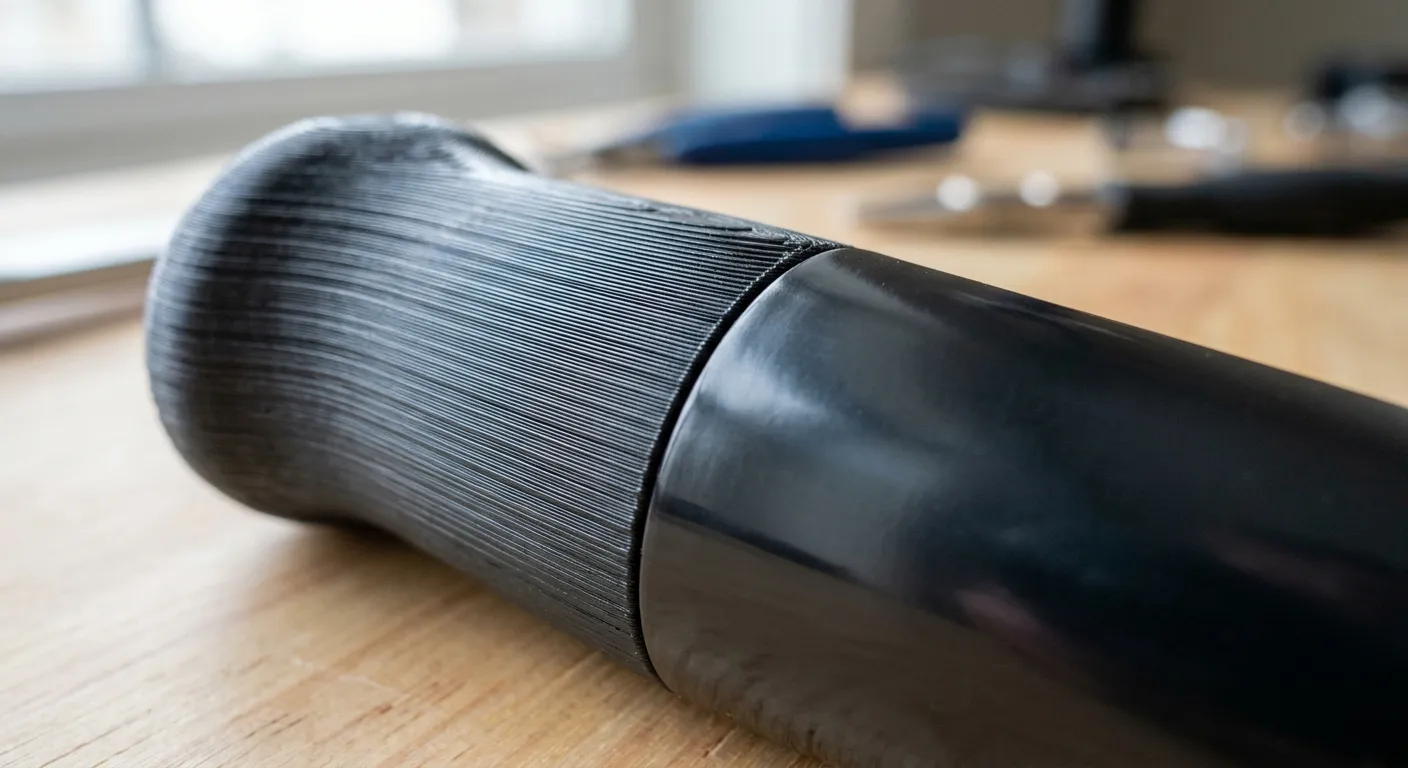
A printed prototype is excellent for checking shape, size and assembly. It is much less reliable for predicting how the molded part will behave, because the process and often the material are different. A print won't show you:
- sink marks and warpage caused by thick sections and uneven cooling;
- weld lines where plastic flows around holes;
- gate marks and ejector pin marks on cosmetic faces;
- how a snap-fit feels and lasts in the real production resin;
- the final dimensions after mold shrinkage, which varies by material.
That is why we carry out a DFM analysis on every part submitted to us, always before any steel is cut, and recommend a prototype mold for parts where cosmetics, fit or certification really matter.
The Smart Approach: Use Both
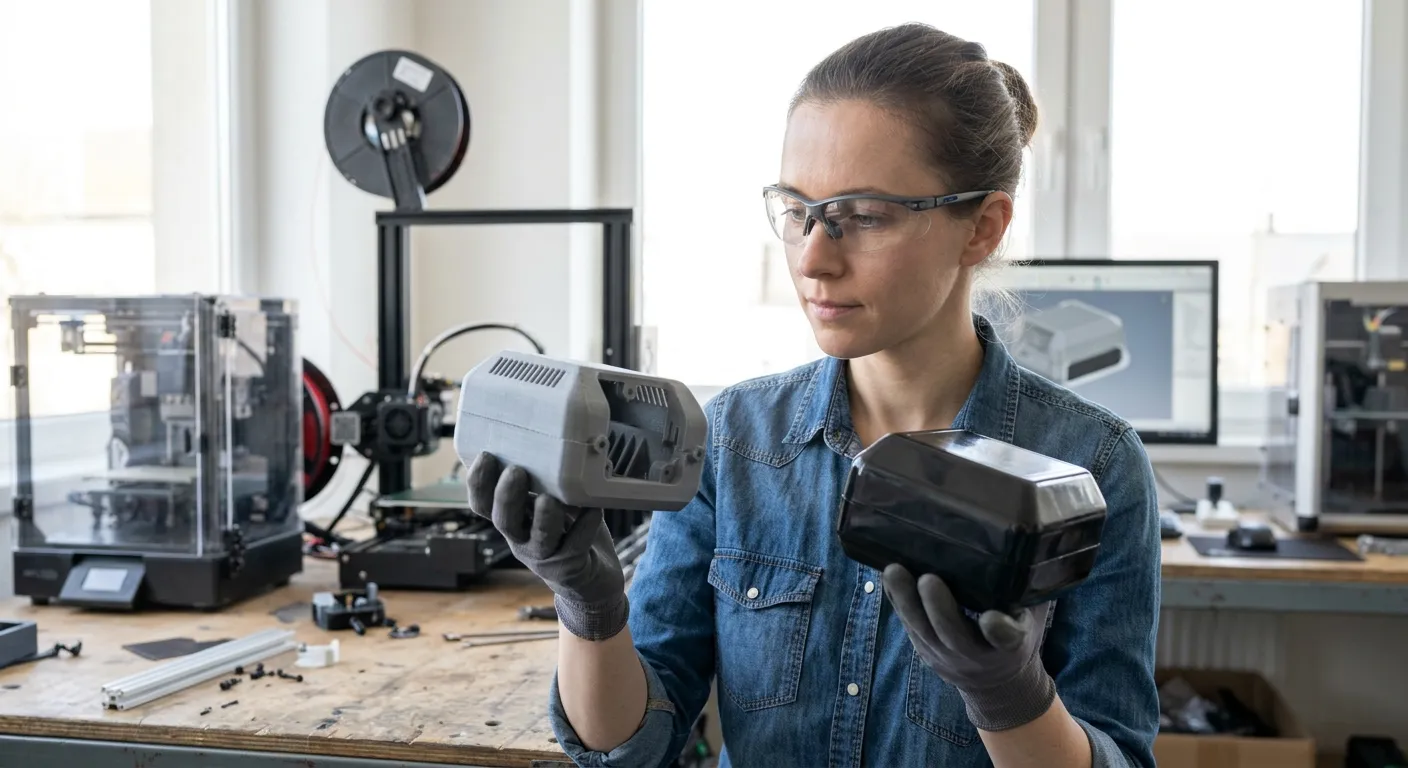
Most successful products use 3D printing early, when changes are cheap, and switch to molding once the design is proven. The key is to design the printed prototypes as if they will be molded — with draft, uniform walls and ribs instead of thick sections — so the test results still apply when you move to a mold.
A Typical Path From First Print to Production
| Stage | Method | Typical quantity | Purpose |
|---|---|---|---|
| Concept | FDM or SLA printing | 1–5 | Check size, shape and ergonomics |
| Functional prototype | SLS or MJF printing | 5–50 | Test fit, assembly and basic function |
| Design for molding review | DFM with your molder | — | Add draft, fix walls, plan gates and undercuts |
| Prototype mold | Single-cavity, low-grade steel | 50–5,000 | Real material, real process: certification, field trials, launch stock |
| Production mold | Multi-cavity, hardened or pre-hardened steel | 5,000 and up | Lowest unit cost at volume |
Which 3D Printing Process for Prototypes?
| Process | Typical tolerance | Finish | Best for |
|---|---|---|---|
| FDM (filament) | ±0.2–0.5 mm | Visible layer lines | Cheap early form and fit checks |
| SLA (resin) | ±0.1–0.2 mm | Smooth, fine detail | Appearance models, small detailed parts |
| SLS (nylon powder) | ±0.3 mm | Slightly grainy | Functional prototypes, no support structures needed |
| MJF (nylon powder) | ±0.3 mm | Slightly grainy, usually grey or dyed black | Functional prototypes and low-volume end-use parts |
Typical values from common service bureaus. Tolerances scale with part size.
Can You Go Straight to a Production Mold?
Yes, if the part is simple, similar to parts you have made before, and the design has been validated with printed prototypes and a thorough DFM review. Going straight to production steel saves the cost of a prototype mold. The risk is that any change found at the first trial must be made in a larger, more expensive mold. Designing critical fits to be steel safe keeps that risk manageable.
Using a Prototype Mold for Early Sales
A prototype mold isn't only for testing. Because it uses the real process and material, it can supply 500 to 5,000 parts for market testing, certification samples or early customer shipments while demand is proven. If the product takes off, a multi-cavity production mold follows; if the design changes, you have risked far less than a full production tool.
Ready to Move From Prints to Molded Parts?
Ichiplas builds single-cavity prototype molds, typically from USD 4,300 to 17,000 depending on the part, in three to five weeks, and runs them on the same 50 to 360-tonne presses we use for production. See our injection molding prototyping service for details.
Send us the CAD file you've been printing via our contact page. We'll run a DFM analysis, suggest any changes, and quote a prototype mold so you can see where your own break-even sits.
Frequently Asked Questions
At what quantity is injection molding cheaper than 3D printing?
For small plastic parts, injection molding usually becomes cheaper somewhere between a few hundred and a few thousand parts. In our worked example — a 20 g housing compared against MJF nylon printing — the break-even was about 1,000 parts. Larger parts push the break-even lower, because print cost rises with part volume; complex molds with slides or lifters push it higher.
Is 3D printing cheaper than injection molding?
For one-offs and small batches, yes, because 3D printing needs no mold. But 3D printing's cost per part barely falls with quantity, while injection molding's falls steeply once the mold is paid for. Beyond the break-even quantity, injection molding is far cheaper — often by a factor of ten or more per part at production volumes.
Can 3D printed parts replace injection molded parts?
Sometimes, for low volumes of functional parts, especially in nylon by SLS or MJF. They usually cannot match injection molding's surface finish, tolerances, material choice or consistent strength, and they cannot be made in most production-grade resins such as flame-rated PC/ABS or glass-filled grades. For anything above a few hundred parts a year, molding is normally the better option.
What problems can a 3D printed prototype miss?
A printed prototype won't show molding-specific issues such as sink marks, weld lines, warpage, gate marks, shrinkage, or how a snap-fit performs in the real production material. These only appear once the part is molded, which is why a prototype mold or careful DFM review is recommended before committing to production tooling.
How long does injection molding take compared with 3D printing?
3D printed parts can be ready in hours or days. Injection molding needs a mold first: a prototype mold typically takes three to five weeks to design and build, and the total time from 3D files to approved molded prototypes is typically four to eight weeks. After that, molding is very fast, with each cycle taking seconds.
Should I design my part differently for 3D printing and injection molding?
If the part will eventually be molded, design it for molding from the start: add draft, keep walls uniform, use ribs instead of thick sections, and plan undercuts. A part designed only for printing often needs significant redesign before it can be molded, which costs time and can invalidate earlier test results.
What is a prototype mold?
A prototype mold is a simpler, lower-cost injection mold, usually single-cavity and in a softer, easier-to-machine steel, built to produce limited quantities — typically up to tens of thousands of shots. It produces genuine molded parts in the production material, making it ideal for testing, certification and early sales before investing in a production mold.
Get Free Quote
Contact us today to learn more about our services and how we can help you with your next project.