
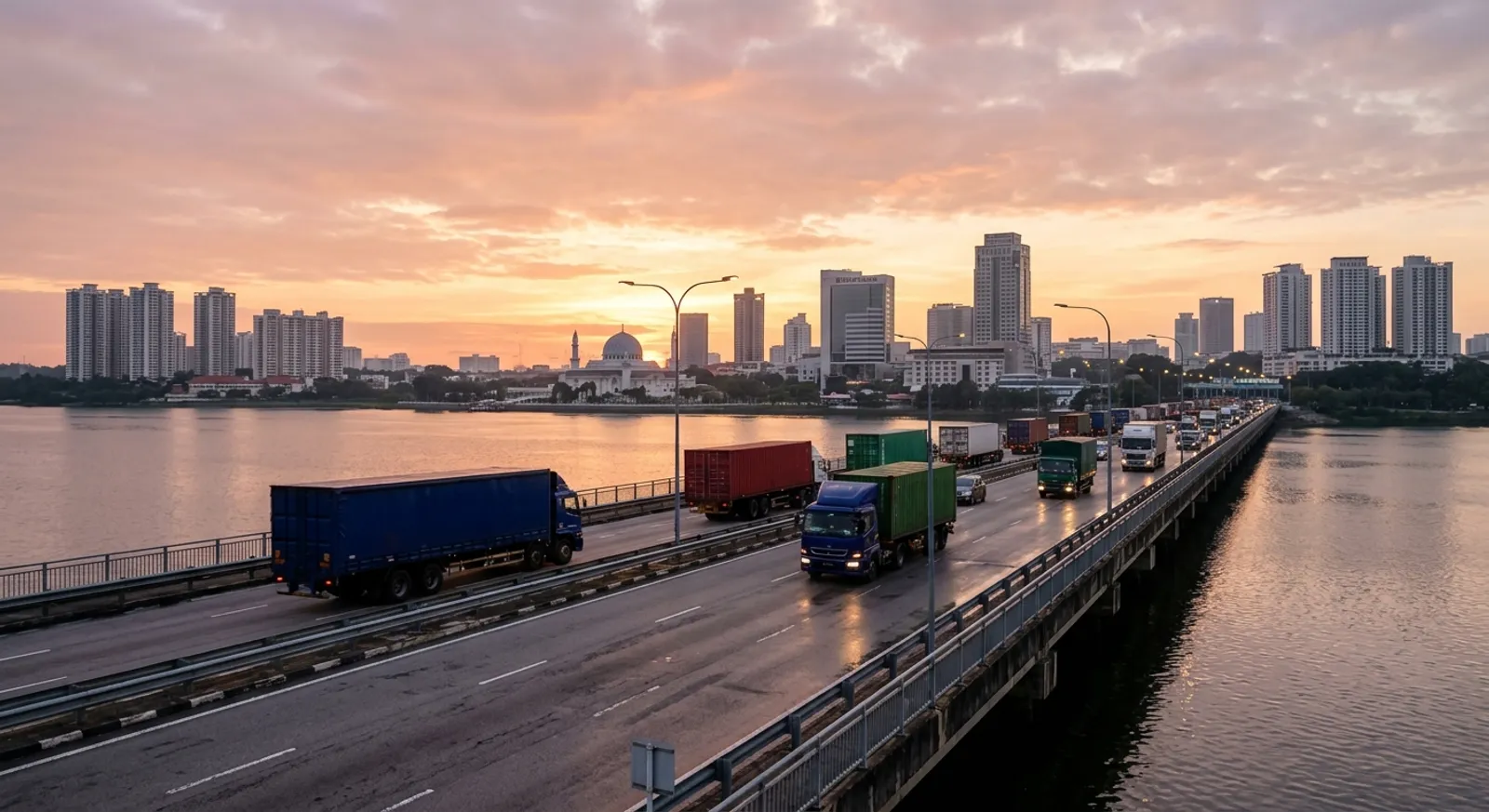
Moving Production from Singapore to Johor: A Practical Guide
By Ichiplas Sourcing & Commercial Team · Nov 2026 · Reviewed by the Ichiplas engineering team
Lower costs and room to grow, a short drive from your Singapore office. A guide from a Johor molder that has served Singapore customers since the 1990s.
The short answer
Moving injection molding and assembly from Singapore to Johor typically cuts labor and floor-space costs significantly, while keeping production a short drive away, in the same time zone and under a similar common-law system. Most companies keep engineering and NPI in Singapore and move molding and high-labor, stable products first. The simplest route is usually to outsource to an established Johor molder, transfer or rebuild the molds in stages, and set up regular cross-border deliveries. A molder with Singapore experience can take most of the move off your hands: Ichiplas, which has served Singapore customers since the 1990s, regularly transports their tools, handles the customs processing and delivers parts back on call.
Singapore remains one of the best places in the world to design, manage and sell manufactured products. It is a harder place to run labor-intensive production: space is scarce, wages are high, and hiring production staff depends on foreign worker quotas. Johor, directly across the border, offers the opposite mix. For decades, Singapore manufacturers have used the two together, and the Johor-Singapore Special Economic Zone (JS-SEZ) agreed in 2025 is designed to make that easier still.
Singapore vs Johor at a Glance
A general comparison for injection molding and assembly work. Individual suppliers and sites vary.
| Factor | Singapore | Johor |
|---|---|---|
| Labor cost | High | Much lower |
| Factory space | Scarce and expensive | Widely available at a much lower cost |
| Hiring production staff | Difficult; heavily dependent on foreign worker quotas | Easier, with a large manufacturing workforce |
| Injection molding supply base | Smaller and shrinking | Large, with many molders, toolmakers and finishing shops |
| Distance | — | Across the Causeway or Second Link; many industrial areas are 20–60 minutes from the border |
| Time zone and language | GMT+8; English | GMT+8; English widely used in business |
| Legal system | Common law | Common law |
| Duty on plastic parts into Singapore | — | None under ATIGA (Singapore GST applies on import) |
| Currency | SGD | MYR; many Johor suppliers, including Ichiplas, can quote in SGD |
What to Move, and What to Keep in Singapore
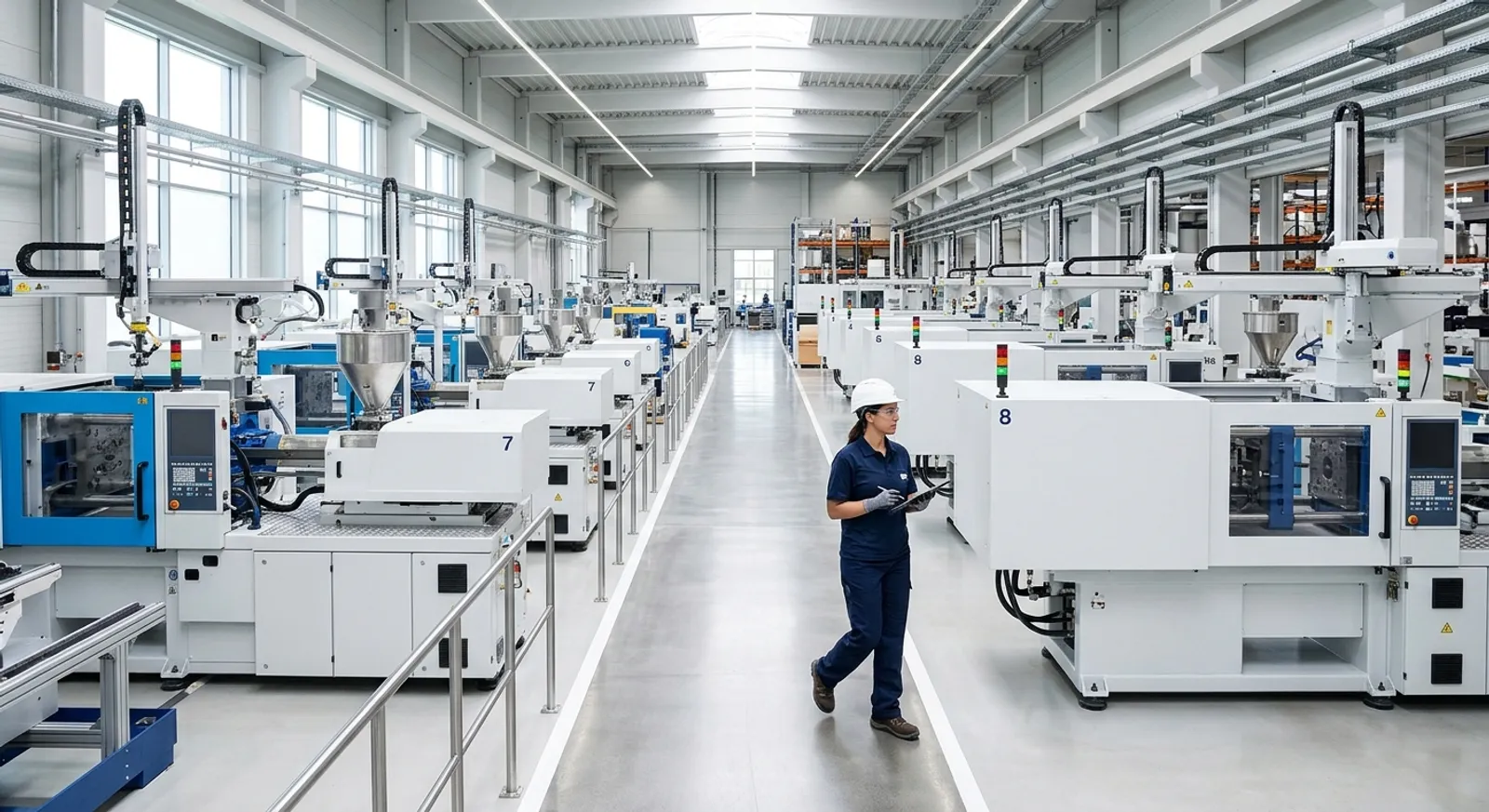
Good candidates to move
- Injection molded parts with stable designs
- High-volume or high-labor sub-assemblies
- Secondary operations: printing, painting, ultrasonic welding, insert installation
- Mature products where cost matters more than change speed
- Packing and kitting of molded components
Often kept in Singapore
- Product design and new product introduction (NPI)
- Customer-facing engineering and program management
- Cleanroom and regulated processes tied to existing certifications
- High-value final assembly, test and configuration
- Products whose design still changes frequently
The split is not fixed. Many companies start by moving a few molded parts, then move sub-assembly once the supplier has proved itself, and keep only the steps that genuinely need to be in Singapore.
Three Ways to Move Production to Johor
| Approach | Best for | Watch out for |
|---|---|---|
| Outsource to a Johor contract molder | Molded parts and sub-assemblies with stable designs; companies that want lower costs without new capital | Choosing the right supplier, IP protection, setting up logistics |
| Set up your own plant in Johor | Large, long-term programs; processes you need to control directly | Capital, licences, hiring and management overhead; 12 months or more to start up |
| Hybrid | Keeping engineering, NPI and final assembly in Singapore while molding and sub-assembly move to Johor | Coordinating two sites and the logistics between them |
How to Move Production Step by Step
The closeness of Johor makes most steps faster than an overseas move. You can audit a supplier in the morning and be back in your Singapore office in the afternoon, and molds and samples can cross the border in a day. The sequence is otherwise the same as any production transfer.
Moving Production Checklist
| Step | What to do |
|---|---|
| 1. Decide what moves | List parts by volume, labor content and design stability. Move high-labor, stable parts first |
| 2. Shortlist suppliers | Check press tonnage range, certification, secondary operations and existing customers in your industry |
| 3. Visit the factories | Walk the production floor, toolroom and QC lab. From Singapore, this is a half-day trip |
| 4. Sign an NDA, then share files | Send CAD, drawings and volumes for quotation and DFM review |
| 5. Plan the molds | Transfer existing molds across the border, or build new ones while the old ones keep running |
| 6. Build safety stock | Cover the time each mold is out of production, plus trials and approval |
| 7. Trial and approve | Compare trial parts with current production samples; complete your first-article or PPAP requirements |
| 8. Set up logistics | Agree delivery frequency, packaging, Incoterms, customs broker and GST handling |
| 9. Ramp up in stages | Move parts in waves, starting with one or two simple parts to prove the process |
Moving the Molds
Molds currently running at a Singapore molder can be crated and trucked to Johor in a day, with an export declaration in Singapore and import clearance in Malaysia. Before they move, confirm you own each mold, and collect its drawings, process sheet, spare parts, maintenance history and recent production samples. The receiving molder then inspects the mold, checks it fits their presses and runs trials before production. Our guide to transferring a mold from China to Malaysia covers each of these steps in detail; from Singapore, the same process simply has a much shorter journey in the middle.
If a mold is old or worn, building a replacement in Johor while the original keeps running in Singapore avoids any production gap.
Cross-Border Logistics and Customs
- Delivery by truck. Parts usually cross by road through the Causeway or the Second Link, typically arriving the same day. Regular, scheduled deliveries let you hold less inventory than with a sea freight supplier.
- Duty and GST. Singapore charges no customs duty on plastic parts. Singapore GST is payable on import, and GST-registered businesses can normally claim it back.
- Customs declarations. Each shipment needs a Malaysian export declaration and a Singapore import permit. Most companies use a freight forwarder or customs broker that handles both sides.
- Incoterms. Agree who arranges and pays for the cross-border transport. With EXW, you collect from the supplier's factory; with delivered terms, the supplier brings the goods to your door.
- Plan around border congestion. Peak hours and public holidays can slow crossings. Build some slack into delivery windows for critical parts.
- Ask about the supplier's customs status. A Malaysian supplier operating as a Licensed Manufacturing Warehouse (LMW) can bring in materials and components for export production without paying import duty or sales tax up front, which keeps both cost and paperwork down.
Choosing a Johor Molding Supplier

- Press range and capacity. Make sure the supplier's press tonnage range covers all the molds you plan to move, with spare capacity for growth.
- Tooling support. A supplier with an in-house toolroom, or close local tooling partners, can maintain, repair and modify your molds without sending them away.
- Quality system. Check certification, inspection equipment and the documentation they can provide, such as CMM reports, first article inspections and PPAP.
- Secondary operations. If printing, painting, plating, welding or assembly happen in one place, there are fewer handoffs and fewer border crossings.
- Track record. Ask how long they have supplied Singapore customers, whether they have moved tools from Singapore before, and whether they can handle the customs side. Then visit the factory, ideally unannounced on a second visit.
Where the Savings Come From
For molded parts, the biggest savings usually come from the machine-hour rate, which includes labor, floor space and overheads, and from any manual assembly, inspection or packing. Material costs are similar on both sides of the border, because resins are bought at regional prices. Factor in the cost of cross-border transport and customs handling, and any one-off costs of moving or rebuilding molds. For most labor-intensive parts, the savings comfortably outweigh these. Our guide to reducing injection molding costs covers other ways to bring the part price down.
Setting Up Your Own Plant in Johor
For large, long-term programs, some companies set up their own Johor facility. That gives full control, but involves company registration, manufacturing licences, a factory lease or build, hiring and training a team, and often 12 months or more before production starts. Investment incentives under the JS-SEZ and from the Malaysian Investment Development Authority (MIDA) may apply to qualifying projects. Many companies outsource first and only build their own plant once volumes justify it, and some keep a contract molder alongside their own plant for peak capacity.
Managing the Supplier from Singapore
Because Johor is so close, Singapore teams can attend mold trials, first-article inspections and production start-ups in person. At Ichiplas, Singapore customers sometimes join us at the press for first-shot trials, which is the fastest way to agree on any adjustments. Schedule regular reviews, such as a monthly factory visit and a quarterly business review, and agree a single point of contact on each side. Cross-border travel is improving: the Johor Bahru to Singapore RTS Link, between Bukit Chagar and Woodlands North, is scheduled to start operating around the end of 2026.
Common Mistakes to Avoid
- Moving everything at once instead of in waves
- Moving parts whose design is still changing every few weeks
- Not building enough safety stock before molds stop running
- Forgetting that your own customers may need to approve the new production site
- Choosing a supplier on price alone, without visiting the factory
- Leaving logistics, customs and GST handling until the first shipment
Moving Production to Ichiplas
Ichiplas is an ISO 9001:2015 certified injection molder in Ulu Tiram, Johor Bahru, about 20 minutes from the Singapore border, and has supplied customers since 1994. We run 50–360 tonne presses across three factories, specialize in overmolding and insert molding, and offer secondary assembly and finishing under one roof.
- Serving Singapore companies since the 1990s; many of our customers are based there
- We often transport tools from Singapore, including the customs processing
- We refurbish transferred tools in-house or with nearby local partners
- We have taken over production from Singapore molders that closed or relocated, including 22 tools restarted in 6 weeks
- Customers attend first-shot trials with us in person
- Sub-assembly, kitting and direct delivery to your own customers
- On-call delivery to Singapore, delivered terms, safety or consignment stock and SGD quotations
- Licensed Manufacturing Warehouse (LMW) status
Every new part goes through a DFM analysis before any steel is cut, and Singapore customers can be on our factory floor the same week. See how we work with Singapore companies.
Send us your part files, mold details and annual volumes via our contact page, or simply check in with us about moving your tools. We'll arrange a visit and quote the move.
Frequently Asked Questions
Why are Singapore companies moving production to Johor?
Mainly cost and capacity. Labor and factory space in Johor cost much less than in Singapore, staff are easier to hire, and Johor has a large supply base of molders, toolmakers and finishing shops. Because Johor is directly across the border, Singapore companies can keep engineering and management in Singapore while production runs a short drive away.
How far is Johor from Singapore?
Johor Bahru is directly across the Johor Strait from Singapore, connected by the Causeway at Woodlands and the Second Link at Tuas. Many Johor industrial areas are 20–60 minutes from the border, depending on location and traffic, so day trips for meetings, audits and trials are routine.
Is there import duty on plastic parts shipped from Malaysia to Singapore?
Singapore charges no customs duty on plastic parts, and both countries are in the ASEAN Trade in Goods Agreement (ATIGA). Singapore Goods and Services Tax (GST) is payable on imports, and GST-registered businesses can normally claim it back as input tax. Each shipment needs Malaysian export and Singapore import declarations, usually handled by a freight forwarder or customs broker.
Can I move my existing molds from Singapore to Johor?
Yes. Molds can be trucked across the border in a day, with export clearance in Singapore and import clearance in Malaysia. The receiving molder should inspect each mold, check it fits their presses and run trial shots before production. Confirm you own the molds, and collect drawings, process sheets, spares and recent production samples before they move. Ichiplas regularly transports tools from Singapore to its Johor factories for customers, including the customs processing on both sides.
What should stay in Singapore?
Many companies keep product development, new product introduction, customer-facing engineering, regulated or cleanroom processes and high-value final assembly in Singapore, and move molding, high-labor sub-assembly and mature, stable products to Johor. The right split depends on your products and your customers' requirements.
How quickly can parts be delivered from Johor to Singapore?
Typically on the same day by truck, depending on the location, traffic and customs processing. Ichiplas delivers finished parts to Singapore on call, using its own or arranged trucks, can ship on delivered terms with the customs and GST paperwork handled, and can hold safety or consignment stock so parts are ready when you need them.
What happens if my Singapore molder closes or relocates?
Your molds can usually be moved to a Johor molder and production restarted after inspection, any refurbishment and trials. Recover the molds, drawings, process sheets and recent production samples as early as possible. Ichiplas has taken over production for customers whose Singapore molders closed or moved: in one case, 22 tools for a Singapore electronics company, with production restarted in 6 weeks. Where little documentation was available, we have reverse-engineered the information from the molds themselves; this works, but takes longer and carries more risk, so it should be the last resort.
What is a Licensed Manufacturing Warehouse (LMW)?
A Licensed Manufacturing Warehouse is a status granted by the Royal Malaysian Customs Department to manufacturers that mainly produce for export. An LMW can bring in raw materials and components for its export production without paying import duty or sales tax up front, which keeps costs and paperwork down for overseas customers, including those in Singapore. Ichiplas operates as an LMW.
What is the Johor-Singapore Special Economic Zone?
The Johor-Singapore Special Economic Zone (JS-SEZ) is an agreement signed by the two governments in January 2025 to make it easier for businesses to operate across the border, with investment incentives for qualifying companies in Johor and plans for simpler cross-border movement of goods and people. It mainly matters if you are setting up your own operation in Johor; check the current incentives with the relevant agencies.
Get Free Quote
Contact us today to learn more about our services and how we can help you with your next project.