
TPE vs TPU vs Silicone: Choosing a Soft-Touch or Flexible Material
By Ichiplas Design Engineering Team · Nov 2026 · Reviewed by the Ichiplas engineering team
Grips, seals, bumpers and soft-touch surfaces can be made from several rubbery materials. Here is how to pick the right one.
The short answer
Choose TPE for cost-effective soft-touch grips and overmolds on consumer products. Choose TPU when the part takes hard wear or contacts oils. Choose TPV for durable seals and outdoor parts up to about 135 °C. Reserve silicone for parts that need very high temperature resistance, the best long-term sealing or medical-grade biocompatibility.
The biggest difference is not on the datasheet but on the molding floor. TPE, TPU and TPV are thermoplastics: they melt, mold on standard injection molding machines, bond directly to rigid plastics in overmolding, and their scrap can be recycled. Silicone is a thermoset rubber: it cures permanently in a hot mold, needs dedicated equipment, and cannot be remelted. That difference drives cost, design options and supplier choice as much as any property.
TPE vs TPU vs TPV vs Silicone: Property Comparison
TPV is included because it is often the best answer for seals, even though it is less well known. Values are typical ranges; individual grades vary widely.
| Property | TPE | TPU | TPV | Silicone |
|---|---|---|---|---|
| Material type | Thermoplastic (usually SEBS-based) | Thermoplastic polyurethane | Thermoplastic with cured EPDM rubber particles | Thermoset rubber |
| Hardness range | Shore 20A–100A | Shore 60A–70D | Shore 40A–60D | Shore 10A–80A |
| Maximum service temperature | About 80 °C | About 100–120 °C | About 135 °C | About 200 °C |
| Abrasion and tear resistance | Low to moderate | Excellent | Moderate | Low tear strength |
| Oil and grease resistance | Poor | Good | Good | Fair |
| Recovery after compression (seals) | Fair | Fair to good | Very good | Excellent |
| UV and weather resistance | Moderate (grade dependent) | Poor unless stabilised | Good | Excellent |
| Transparency | Translucent to opaque | Clear grades available | Opaque | Clear grades available |
| Overmolds onto rigid plastics | ABS, PC, PC/ABS, PP (matched grades) | PC, PC/ABS, ABS, nylon | PP only (chemically) | Only with special grades and heat-resistant substrates |
| Processing | Easy, fast cycles, no drying | Needs drying, longer cycles | Standard injection molding | Dedicated liquid silicone (LSR) equipment |
| Recyclable scrap | Yes | Yes | Yes | No |
| Relative cost | $ | $$$ | $$ | $$$ |
When to Choose Each Material
TPE: the soft-touch workhorse
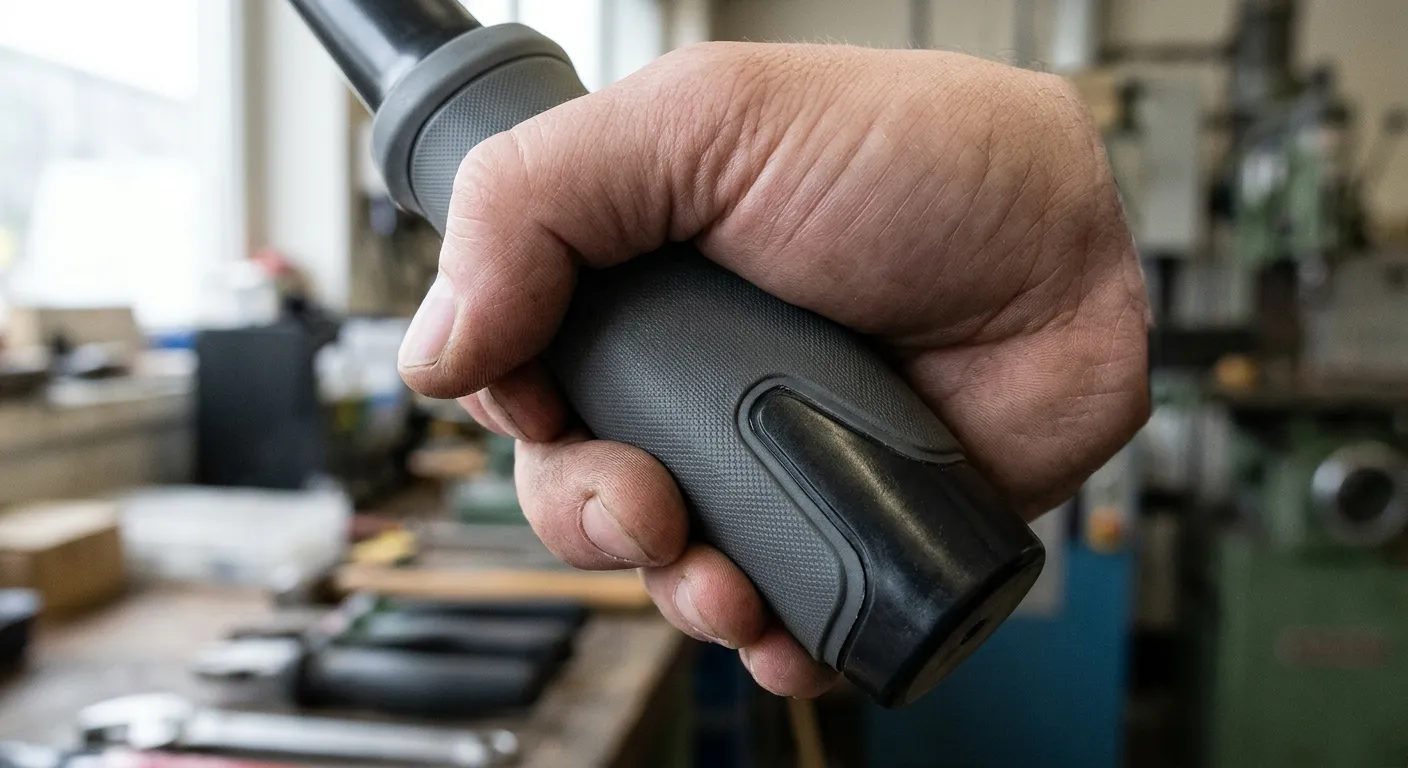
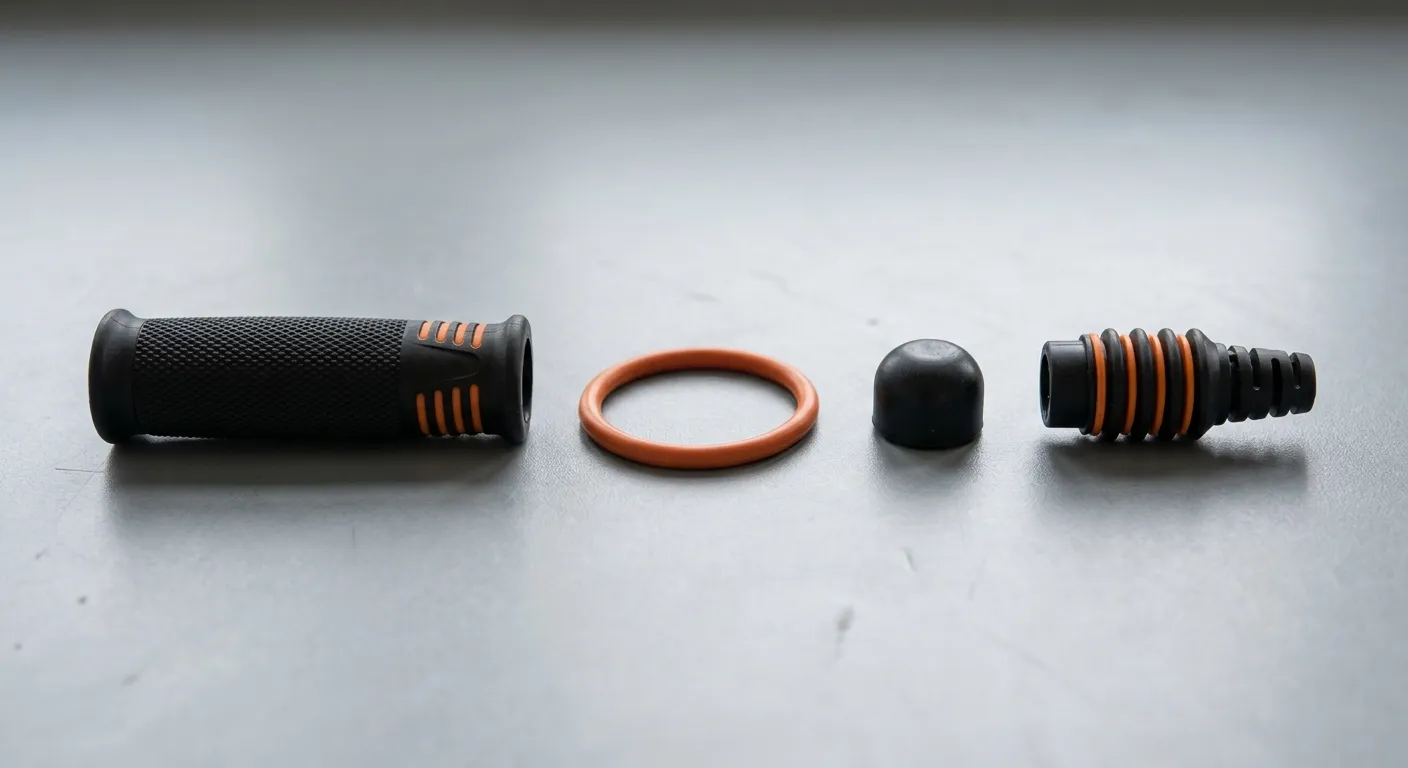
TPE (usually SEBS-based) is available from gel-soft to firm, is inexpensive, molds quickly without drying, and comes in grades formulated to bond to ABS, PC, PC/ABS or PP. That makes it the default for soft-touch grips, button pads, cable boots and dust covers. Its limits are modest heat resistance, poor oil resistance and lower wear resistance than TPU.
TPU: toughness and abrasion resistance
TPU is the toughest of the thermoplastic elastomers, with outstanding abrasion and tear resistance and good resistance to oils and greases. It is used for phone cases, wheels and castors, rollers, sports equipment and heavy-duty tool grips, and bonds well to PC, PC/ABS, ABS and nylon. It costs more, needs thorough drying and longer cycles, and standard grades yellow in sunlight.
TPV: rubber-like sealing in a thermoplastic
TPV contains cured EPDM rubber particles in a polypropylene matrix, so it behaves more like conventional rubber than other thermoplastic elastomers. It recovers well after compression, resists weathering and handles temperatures up to about 135 °C, making it a strong choice for seals, gaskets and outdoor parts. It bonds chemically only to PP; on other substrates it needs a mechanical lock.
Silicone: extreme temperatures and biocompatibility
Silicone rubber handles a far wider temperature range than any thermoplastic elastomer, from well below freezing to about 200 °C, with excellent long-term sealing, weathering resistance and biocompatible grades. It is the material of choice for high-temperature seals, baby products, kitchenware and many medical parts. The trade-offs are lower tear strength, the need for dedicated liquid silicone (LSR) molding equipment, higher cost, and scrap that cannot be recycled.
Quick Chooser
| If your part is… | Choose | Why |
|---|---|---|
| A soft-touch grip or handle on a consumer product | TPE | Lowest cost, very soft feel, bonds to common substrates |
| A grip, bumper or wheel that takes hard wear | TPU | Outstanding abrasion and tear resistance |
| Exposed to oils, greases or fuels | TPU or TPV | Standard TPE swells in oil |
| A seal or gasket that must stay sealed for years | TPV (or silicone at high temperatures) | Recovers well after long compression |
| Outdoors or in hot environments up to about 135 °C | TPV | Good weathering and heat resistance |
| Above about 150 °C, or needing medical-grade biocompatibility | Silicone | Unmatched heat range and biocompatible grades |
| A clear flexible part | TPU or silicone | Clear grades available |
Which Soft Material Bonds to Which Substrate?
For overmolded parts, chemical adhesion between the soft layer and the rigid substrate is often the deciding factor. Where a pairing doesn't bond, the soft layer must be locked on mechanically with holes, undercuts or wrap-arounds.
| Rigid substrate | TPE | TPU | TPV |
|---|---|---|---|
| ABS | Good (ABS-bonding grade) | Good | Mechanical lock only |
| PC and PC/ABS | Good (PC-bonding grade) | Excellent | Mechanical lock only |
| PP | Excellent | Poor without treatment | Excellent |
| Nylon (PA6 / PA66) | Special grades only | Good | Mechanical lock only |
| PBT | Special grades only | Good | Mechanical lock only |
| POM (acetal) | Mechanical lock only | Mechanical lock only | Mechanical lock only |
Bonding depends on the exact grades, mold temperatures and design. Always validate peel strength on molded samples.
Learn more about how soft-touch layers are molded onto rigid parts on our overmolding service page.
Design Tips for Soft-Touch Overmolds
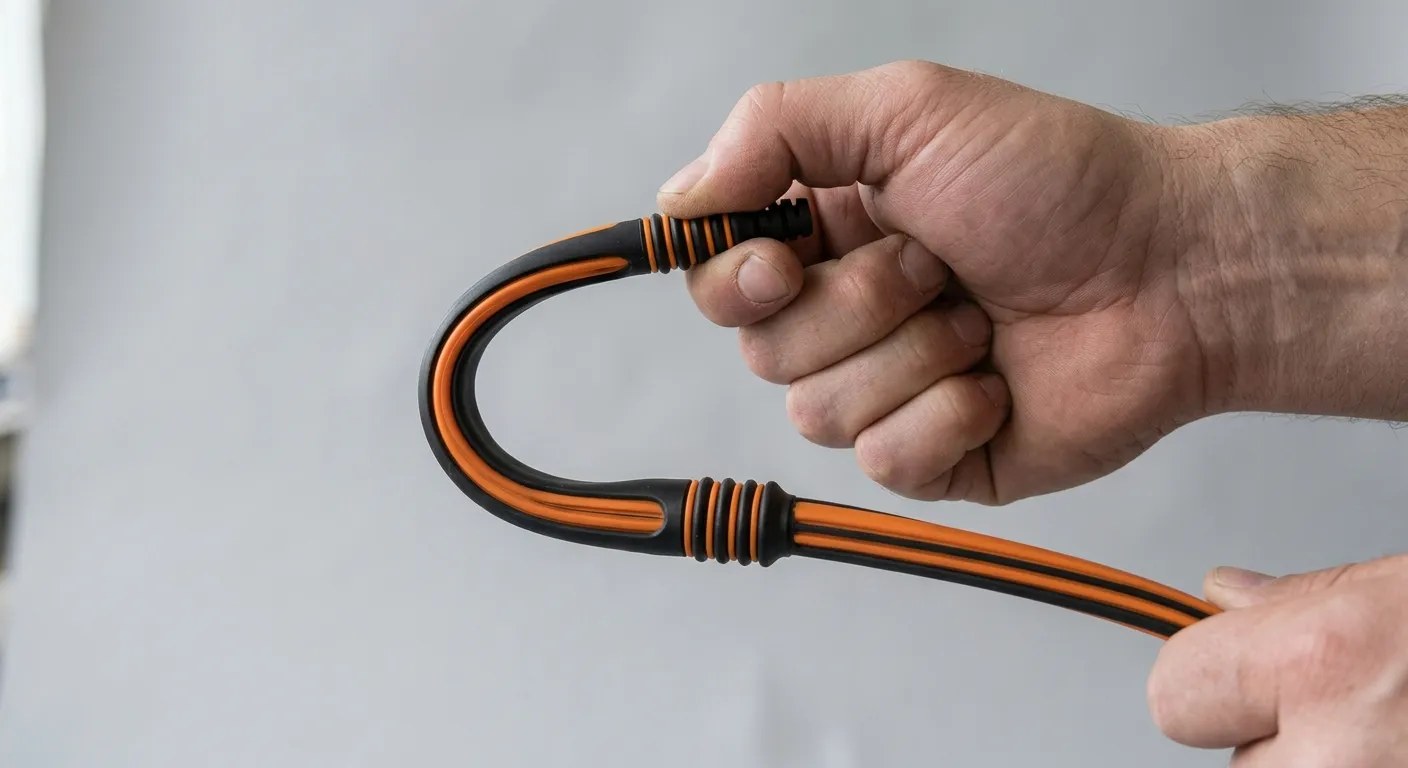
- Keep the soft layer uniform. A soft layer of roughly 1–3 mm suits most grips. Very thin layers are hard to fill; very thick ones sink and cost more.
- End the soft layer in a groove. Let the edge of the overmold finish in a shallow channel in the substrate rather than on a flat surface. It looks neater, stops the edge from peeling and gives the mold a clean shut-off.
- Add mechanical locks where bonding is weak. Through-holes, undercuts and wrap-around edges hold the soft layer in place even when the materials don't bond chemically.
- Settle the hardness early. Most grips sit between Shore 40A and 70A. Shore hardness is specified during the DFM stage, because it affects the material grade, the mold design and how the soft layer fills, so decide it before tooling starts. Keep in mind that the feel of a grip also depends on its thickness and texture.
- Texture the mold for soft-touch surfaces. A light texture hides flow marks and improves grip. See our guide to surface textures and finishes.
Overmolding vs Two-Shot Molding
There are two main ways to combine a soft and a rigid material. In overmolding, the rigid substrate is molded first and then placed into a second mold where the soft material is added. In two-shot (2K) molding, a specialised machine injects both materials in one cycle, usually with a rotating mold. Two-shot is faster at very high volumes but needs more expensive tooling and equipment; overmolding is more flexible and cost-effective for most programs.
Shore Hardness in Everyday Terms
- Shore 20A: very soft, gel-like
- Shore 40A: soft rubber band or pencil eraser
- Shore 60A: typical soft-touch grip, car tyre tread
- Shore 80–90A: shoe heel
- Shore 95A: very firm, like a hard skateboard or shopping-trolley wheel; a common hardness for tough TPU parts
- Shore 50D and above: semi-rigid; approaching hard plastic
Food Contact and Skin Contact
Food-contact and skin-contact grades exist for TPE, TPU and silicone, but compliance belongs to a specific grade, not the material family. Specify the regulation you need — for example FDA 21 CFR or EU 10/2011 for food contact — and ask for the resin supplier's compliance statement for the exact grade and color. Medical parts that touch patients typically also require a molder certified to ISO 13485. See our guide to plastic applications and standards.
Recyclability
Because TPE, TPU and TPV are thermoplastics, sprues, runners and rejects can be reground and reused where the customer specification allows, and recycled-content and bio-based grades are increasingly available. Cured silicone cannot be remelted, so its scrap is harder to recycle. For brands with recycled-content or end-of-life targets, this can tip the decision towards a thermoplastic elastomer.
Soft-Touch and Overmolded Parts at Ichiplas
Ichiplas overmolds TPE, TPU and TPV onto a wide range of substrates, including ABS, PC, PC/ABS, PP, PBT, POM and nylon, for grips, seals and soft-touch features. Every part we quote goes through a DFM analysis before any steel is cut, and if you haven't settled on a material yet, we can recommend one based on your requirements during the quotation process.
Send us your CAD files and a description of how the part is used via our contact page, and we'll quote the tooling and parts.
Frequently Asked Questions
What is the difference between TPE and TPU?
TPE is a broad family of thermoplastic elastomers; in molding, it usually means styrenic (SEBS-based) compounds that are soft, inexpensive and easy to process. TPU is a specific, tougher type of thermoplastic elastomer based on polyurethane, with much better abrasion, tear and oil resistance, at a higher cost and with more demanding processing. TPU is technically a type of TPE, but the two names are used to distinguish these grades.
Is TPE better than silicone?
Neither is better in general. TPE is cheaper, faster to mold, recyclable, and bonds directly to rigid plastics in overmolding, which makes it ideal for grips and soft-touch features. Silicone handles far higher temperatures, recovers better from compression and has proven biocompatible grades, so it is preferred for high-temperature seals, medical and some food-contact parts.
Which is more durable, TPE or TPU?
TPU is considerably more durable. It has much higher abrasion and tear resistance, better oil and grease resistance and higher strength, which is why it is used for wheels, rollers, phone cases and heavy-duty grips. Standard TPE is softer and more economical but wears faster under abrasion.
What material is best for overmolding a soft grip?
For most consumer grips, a TPE grade formulated to bond to the substrate (ABS, PC, PC/ABS or PP) gives the best balance of feel, cost and processing. For grips that take heavy wear or contact oils, TPU bonded to PC, PC/ABS, ABS or nylon is the better choice. TPV is mainly used on PP substrates.
Can silicone be overmolded onto plastic?
Yes, but it is more demanding than overmolding thermoplastic elastomers. Liquid silicone is cured in a hot mold, so the rigid substrate must withstand those temperatures — typically PC, PBT or nylon — and self-adhesive silicone grades or primers are needed for a chemical bond. It also requires dedicated liquid silicone injection equipment.
What does Shore hardness mean for TPE and TPU?
Shore hardness measures how hard a flexible material is. The Shore A scale covers soft materials: about 20A feels like a soft gel, 40–60A like a typical soft-touch grip, 80–90A like a shoe heel, and 95A like a hard wheel. Beyond about 95A, materials are usually measured on the Shore D scale instead. Most overmolded grips fall between about 40A and 70A.
Which flexible material is best for seals and gaskets?
For seals that must hold their shape under long-term compression, TPV is usually the best thermoplastic choice, because its cured rubber phase recovers well and it resists weathering and many chemicals. Silicone is better still for high-temperature or medical seals. Standard TPE is suitable only for light-duty seals and dust covers.
Get Free Quote
Contact us today to learn more about our services and how we can help you with your next project.